The Essence of Christian Life and Witness
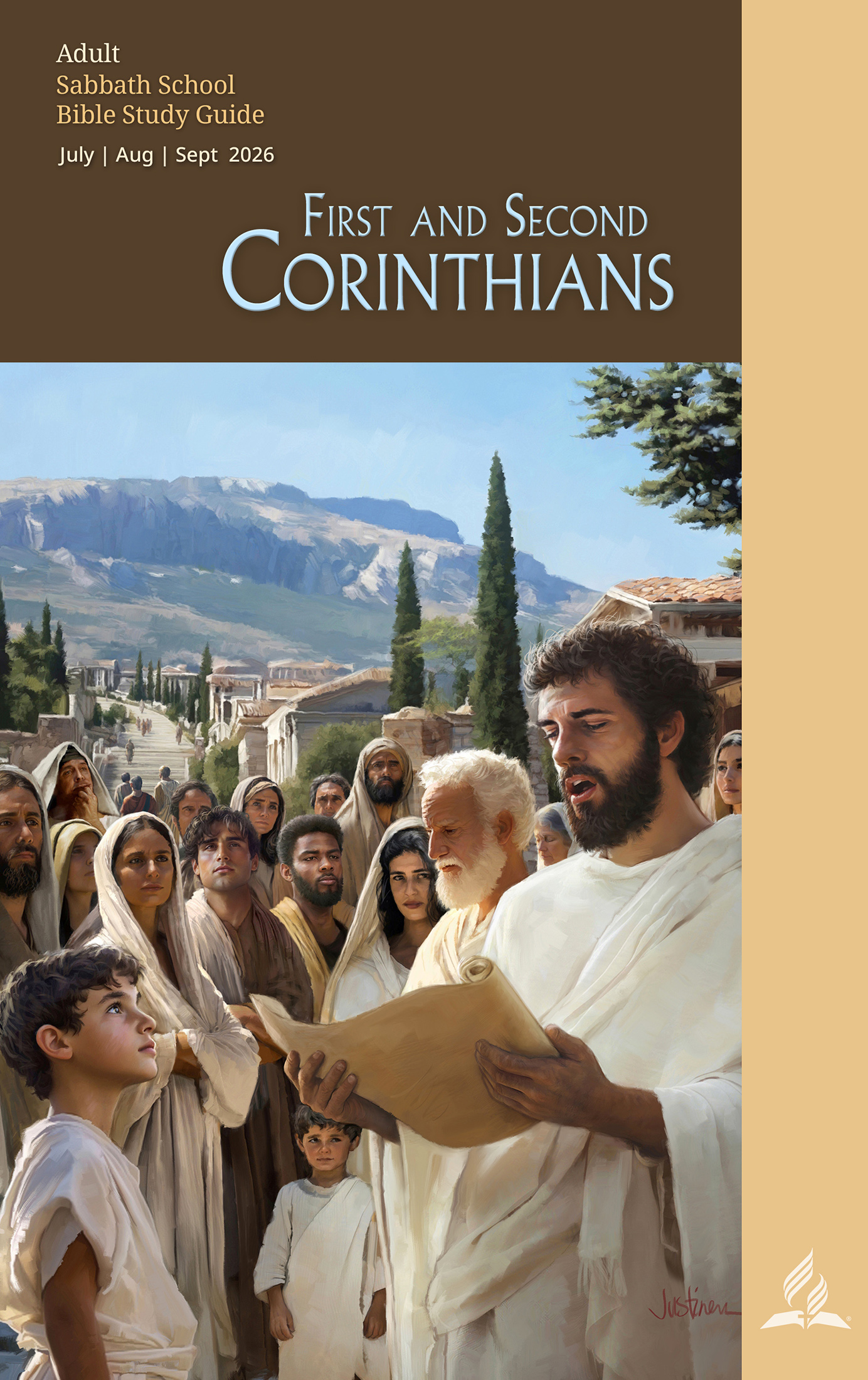
Writing letters is an age-old activity that has not become obsolete. We've merely changed the way that letters are written. Yes, social media superseded paper. However, in their essence, emails and other forms of electronic letters exert basically the same function: they connect people by exchanging information, feelings, and thoughts.
Why do people write letters? A possible answer is that they have something to say. So it was with the apostle Paul. Although he had so much to say, Paul did not always have the chance to be face-to-face with those whom he wanted to talk with.
So, he wrote letters instead--such as to the Corinthians, which contain some of Scripture's profoundest truths. Among them are: "I decided to know nothing among you except Jesus Christ and him crucified" (1 Cor. 2:2, ESV), and "For you know the grace of our Lord Jesus Christ, that though he was rich, yet for your sake he became poor, so that you by his poverty might become rich" (2 Cor. 8:9, ESV). And what about the stunning hymn to love in 1 Corinthians 13?
On the other hand, whoever reads Paul's letters to the Corinthians will inevitably get perplexed, not only because of some substantial problems within the church--such as sexual immorality--but also because of the nitpicking that results from cheap factionalism among the members. If you think your church has challenging issues, get ready to see the avalanche of problems Paul had to deal with in Corinth. Perhaps your local church's problems are not as significant as you imagine. Very likely, you will see that things in Corinth had been much worse.
As disturbing as the problems in Corinth had been, the letters to the Corinthians capture our attention, not because of the problems but because of the remarkable way Paul faces them. By exhorting the church members to evaluate themselves, their behavior, and the surrounding culture in the light of the gospel of Jesus Christ, he exalts the message of the Cross. To use the words of Paul himself elsewhere, any standard lower than the gospel message is to be seen as "anathema" (Gal. 1:8-9, ASV).
In Paul's time, Corinth was famous for its wealth and strong commerce, all thanks to its port, architecture, shipbuilding, and ceramics. The city was an important financial center. Nevertheless, it was also known for its sexual immorality, religious cacophony, and shrines dedicated to various gods. Indeed, daily life in Corinth was marked by flagrant idolatry. This historical-cultural background helps us understand Paul's main concerns regarding the Christians in that city and, consequently, his exhortations to them.
This quarter, we will survey Paul's letters to the Corinthians. In these two remarkable New Testament books, the apostle presents the gospel message as the essence of Christian life and witness, the lens through which everything else is to be judged. No matter the challenges each of us individually or the church in general faces in our journey to heaven--the answer to the most puzzling issues in our work for Christ is the same as for the Corinthians: "Jesus Christ and Him crucified"! (1 Cor. 2:2, NKJV).
Jesus is coming soon. This is a time for more unity in Christ, for an openness to the Holy Spirit as never before, for diligent use of the spiritual gifts, and for a more profound experience with our resurrected Lord. It is time for a genuine Christian ministry, engagement in stewardship and mission, spiritual warfare against false teachings, and growth in grace, love, and fellowship. This is a time to hold fast and be faithful to the message of the Cross, and Paul's letters to the Corinthians teach us to do just that.
Adenilton Tavares de Aguiar, PhD, is a professor of Biblical Interpretation at the Theological Seminary at the Adventist University Center of São Paulo (UNASP) in Brazil.
Lesson 1 June 27--July 3
Paul's Ministry in Corinth
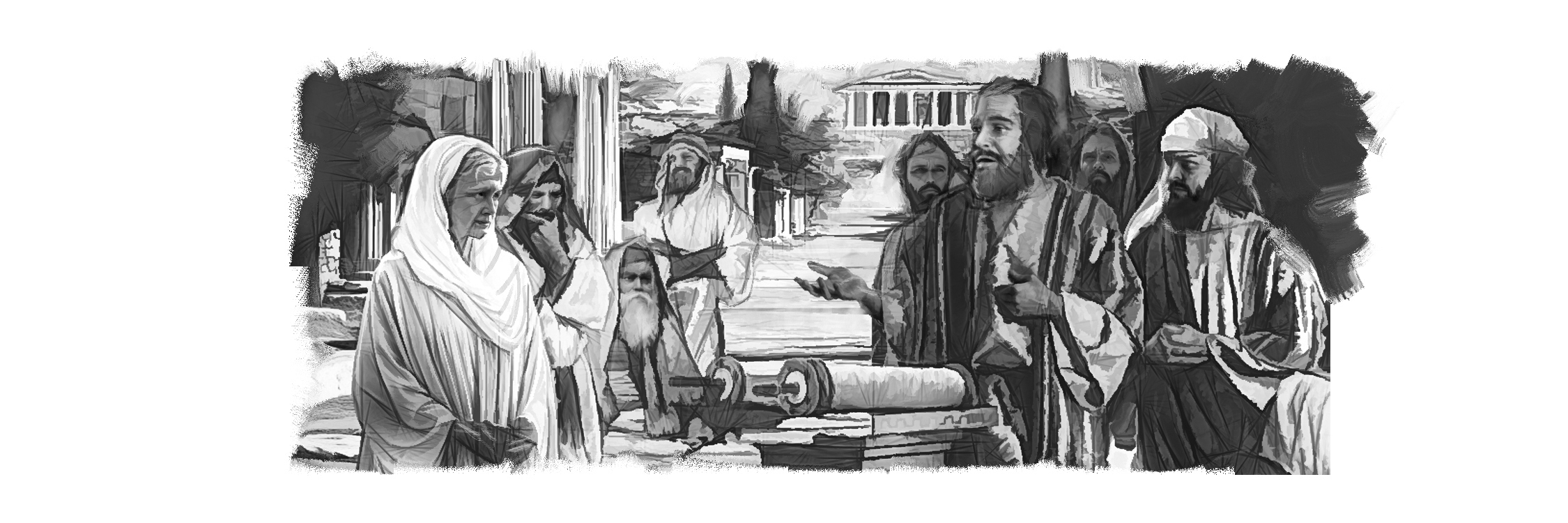
Sabbath Afternoon
Read for This Week's Study: 1 Cor. 1:1, Gal. 1:1, Acts 17:16-34, 1 Cor. 5:9-11, Acts 18:4-10, 2 Cor. 2:4
Memory Text: "One night the Lord said to Paul in a vision, 'Do not be afraid, but speak and do not be silent; for I am with you, and no one will lay a hand on you to harm you, for there are many in this city who are my people' " (Acts 18:9-10, NRSV).
The great English missionary William Carey used to say that he cobbled shoes to pay his expenses, but his real business was winning souls.
Likewise, Paul worked as a tentmaker for a living (Acts 18:1-3), but his real business was, of course, winning people to Christ.
This week, we will get a glimpse of Paul's ministry to the church in the city of Corinth. The church, as we will see, was full of problems, many that were not unlike what our churches face today, almost two thousand years later. Indeed, anyone who has been in Christianity for any length of time, or who has been involved in church work, could ask the question: Have you ever found a Christian group that doesn't have any problems? The answer is, of course, obvious.
Paul faces challenges in Corinth but does so with the message of the Cross (1 Cor. 2:2). Faithfulness to this message is also the way to face the challenges that we have today. As we will see this week and throughout this quarter, the message of 1 and 2 Corinthians applies to our lives, as well.
* Study this week's lesson to prepare for Sabbath, July 4.
Paul, a God-called Apostle of Jesus
Paul begins his letter to the Corinthians by identifying himself as an apostle of Jesus, called "through the will of God" (1 Cor. 1:1; compare with 2 Cor. 1:1). His conviction regarding who he is in relation to Jesus is so firm that, with a few exceptions, this is the way he opens all his letters.
Read 1 Corinthians 1:1 and Romans 1:1. What two elements of Paul's ministry are emphasized in these passages? (See also Gal. 1:1.)
Paul speaks of his calling and apostleship as fulfilling God's will. He is convinced that his calling is not from men, but from God (Gal. 1:1). Paul was called by God from his mother's womb like Jeremiah (Jer. 1:5) as an act of God's grace (Gal. 1:15), and it happened so that He would proclaim the gospel of Christ among the Gentiles.
In 1 Corinthians 15:8, Paul includes himself among those to whom Christ appeared after the resurrection 1 Cor. 15:5-7). A few verses later, he implies that his calling to be an apostle resulted from that encounter with Jesus (1 Cor. 15:9-11).
The title "apostle of Jesus" encompasses a series of concepts. Primarily, it conveys the idea of one whom Jesus sends. Nevertheless, Paul also uses this phrase to identify himself as a servant of Christ (Rom. 1:1, Titus 1:1, Gal. 1:10), as well as a preacher and a teacher (1 Tim. 2:7, 2 Tim. 1:11). Whether he preaches or teaches, Christ is always in evidence. In short, Paul is an apostle of Jesus.
Jesus is not only the center of Paul's apostleship. He is the center of Paul's life. Paul's thoughts and feelings were filled with the presence of Jesus. Evidence of this fact is that he refers to Jesus repeatedly in the opening and the thanksgiving section of 1 Corinthians (nine times in nine verses). Paul loved Jesus so much that he couldn't stop thinking and talking about Him. He wanted to share Jesus with those under his care so that their lives would be Christ-centered, too. While he was called to be an apostle, they were called to be faithful followers of Jesus in whatever capacity to which the Lord called them.
Paul was called to be an apostle. What is your calling, and how do you know that it is your calling? If you don't think you have one, why not go right now to God and ask Him to show you the work He chose you to do?
From Athens to Corinth
Read Acts 17:16-34. Where was Paul before going to Corinth, and what did he do there?
Acts 17:16-34 describes Paul's preaching to the Athenians before his going to Corinth. Apparently, he did not plan to visit Athens at that moment, but went there with the help of some friends because of the opposition that he faced at Berea (Acts 17:13-15).
Those who went with Paul to Athens returned to Berea with a command for Timothy and Silas to join him as soon as possible (Acts 17:15). Acts 17:16-34 is about what Paul does while waiting for them. He speaks about Jesus in the synagogue, the marketplace, and the Areopagus. He really couldn't stop talking about Jesus and took advantage of every opportunity to do it.
Read Acts 18:1-11. What does Paul do when he arrives at Corinth and during his whole stay in that city?
Paul went to Corinth during his second missionary journey. Luke informs us that Paul stayed there a year and a half.
As usual, Paul begins his missionary activity at the synagogue (Acts 18:4-6). Acts 17:1-2 mentions that this was his custom. He followed the "to-the-Jew-first" strategy (Rom. 1:16, Acts 13:46), just as Jesus had commanded His apostles (see Acts 1:8).
When finally Silas and Timothy joined him in Corinth, he "was occupied with the word, testifying to the Jews that the Christ was Jesus" (Acts 18:5, ESV). During his stay in Corinth, he was busy "teaching the word of God" (Acts 18:11, NKJV). It was in this context, too, that he expressed those famous words that he was "determined not to know anything among" the Corinthians "except Jesus Christ and Him crucified" (1 Cor. 2:2, NKJV).
What can we learn from Paul's missionary activity in Athens and Corinth? What makes sharing the gospel so challenging in our cities and communities today? How can we share the gospel with success in these difficult places? What strategies can we learn from Paul's missionary activity about how to best do that?
The City of Corinth
Read Acts 18:1-3, 1 Corinthians 5:9-11, and 1 Corinthians 8:4. What can we infer about Corinth's economy, morality, and religious life?
Corinth was an important center of the ancient world, renowned for its prosperous commerce. The city was destroyed by Rome in 146 B.C. and rebuilt by Julius Caesar as a Roman colony in 44 B.C. It is this Roman Corinth that appears in the New Testament. In the time of Paul, Corinth was one of Athens' rivals and had even surpassed it in various aspects. Corinth had two important harbors that made the exchange of merchandise and the development of its commerce easy.
Indeed, Paul chose Corinth because of its importance and advantaged geographic location. "An opportunity was thus presented for the spread of the gospel. Once established at Corinth, it would be readily communicated to all parts of the world."--Ellen G. White, Sketches from the Life of Paul, p. 99.
In addition, the flourishing commerce of Corinth would make it easier for Paul to support himself by producing and selling tents while proclaiming the gospel in that city (Acts 18:2-3). Obviously, missionary work in a large and wealthy city is not free of challenges. Corinth was marked by a blatant religious pluralism (1 Cor. 8:5), evident by its numerous shrines built in homage to such deities as Apollo, Athena, and Aphrodite, among others, and even the worship of such Egyptian gods as Serapis and Isis.
In addition to this religious confusion, Corinth was also known for its sexual licentiousness. Strabo, a Greek geographer and historian, mentions that there were 1,000 sacred prostitutes devoted to the worship of Aphrodite in her temple at Corinth. Although many scholars view this with suspicion and connect this claim to Athenian propaganda against Corinth, ritual prostitution was common in the ancient world. Sexual immorality was a problem in Corinth, as elsewhere. Idolatry and immorality were part of daily life, and this sad reality explains much of the content of 1 and 2 Corinthians.
In his missionary activity in Corinth, Paul faced the challenge of an idolatrous and licentious society. What challenges in today's culture can make it hard to preach the gospel? How can we overcome them? How much difference, if any, is there between Corinth and our cities today?
"Many in This City"
Read Acts 18:4-8. What were the results of Paul's preaching?
The work of Paul among the Jews at Corinth was not as fruitful as he wanted it to be. He had to face some hostility and hatred. The Bible says that "they opposed him and blasphemed" (Acts 18:6, NKJV). When the object of the Greek verb blasphēmeō ("to blaspheme") is a human being, it means "to revile" or "to defame." In other words, they intended to stain Paul's reputation and to prevent him from succeeding in his missionary endeavors.
Fortunately, the work of Paul in the Corinthian synagogue was not in vain. After all, God was in charge of His mission. He promised, "[My word] shall not return to me empty" (Isa. 55:11, ESV). Some Jews did not expect that Crispus, the synagogue's ruler, and his entire household would accept Jesus as the Messiah and get baptized (Acts 18:8). In addition, "many of the Corinthians, hearing, believed and were baptized" (Acts 18:8, NKJV), very likely also because of the influence of Crispus.
Read Acts 18:9-10. What can we infer about Paul's feelings in the face of his challenges in Corinth? How did God encourage his servant?
Right after Paul left the synagogue, he had an experience that brought him encouragement. Christ Himself appeared to him by night in a vision, with words that recall Isaiah 41:10: "Fear not, for I am with you" (NKJV). Indeed, Paul admits he was in Corinth "in weakness, in fear, and in much trembling" (1 Cor. 2:3, NKJV). He had to depart from Berea to Athens because of staunch opposition. He seems to have thought he would have to leave Corinth for the same reason: great opposition. But that would not happen this time. Jesus said to him: " 'I have many people in this city' " (Acts 18:10, NKJV). And Paul was His instrument to take the news of salvation to them.
Read Isaiah 41:10. What wonderful promises does God give you in this verse? What hope do they give you right now in your life?
Paul's Letters to the Corinthians
Read 1 Corinthians 1:11-13; 1 Corinthians 4:14; 1 Corinthians 5:11; 1 Corinthians 7:1; and 1 Corinthians 14:37, 40. Also read 2 Corinthians 1:12, 2 Corinthians 2:9, 2 Corinthians 11:3, and 2 Corinthians 13:10. How do these passages help us understand why Paul wrote letters to the Corinthians?
Paul was in Ephesus when he wrote 1 Corinthians (1 Cor. 16:5-9). The family of Chloe went to him with the report that things were not going too well back in Corinth (1 Cor. 1:11). In 1 Corinthians 1-6, Paul addresses the issues brought by Chloe's household. The problems include factionalism, sexual immorality, lawsuits, and prostitution. Paul also received a letter with specific questions (1 Cor. 7:1). His response fills the space from chapter 7 onward. The questions were related to marriage, divorce, celibacy, food sacrificed to idols, conduct in worship, the use of spiritual gifts, and incorrect understanding of the resurrection. The church of Corinth was very problematic and immature. Perhaps your local church has many problems. Yet the church at Corinth was probably worse.
Paul's first letter to the Corinthians is very relevant to our time, as well. After all, don't we, to some degree, face some of the same issues in many of our churches today? This letter has much to say to us. It is "one of the richest, most instructive, most powerful of all his letters."--Ellen G. White, The Acts of the Apostles, p. 301.
Paul may have written three or four letters to the Corinthians (compare with 2 Cor. 10:9). He wrote an initial letter before 1 Corinthians (1 Cor. 5:9), but it is lost. Before 2 Corinthians, he wrote a letter referred to by scholars as the "severe letter" (2 Cor. 2:3-4, 9; 2 Cor. 7:8), but it is lost, too. Some think that he is referring to 1 Corinthians, or that this letter is partly preserved in 2 Corinthians.
From 2 Corinthians, we realize that the members of Corinth were influenced by the surrounding culture. They valued such things as competition, power, and wealth, all things that can challenge our church today, as well. Conversely, Paul sought to create a Christ-focused culture, a way of seeing the world through the lens of the gospel. How crucial that we, too, see our present world through the lens of the gospel.
Read 2 Corinthians 2:4 again. What does this verse tell you about how much Paul cared for these people? How much love is in your heart for others?
Further Thought: Read Ellen G. White, "Corinth," pp. 243-254, in The Acts of the Apostles.
"In preaching the gospel in Corinth, the apostle followed a course different from that which had marked his labors at Athens. . . . He determined to avoid elaborate arguments and discussions, and 'not to know anything' among the Corinthians 'save Jesus Christ, and Him crucified.'"--Ellen G. White, The Acts of the Apostles, p. 244.
"Paul had a measure of success," but he "doubted the wisdom of building up a church from the material he found there. He considered Corinth a very questionable field of labor, and determined to leave it. . . .
"As he was contemplating leaving the city for a more promising field, . . . the Lord appeared to him in a vision of the night, and said, 'Be not afraid, but speak, . . . for I have much people in this city.' Paul understood this to be a command to remain in Corinth, and a guarantee that the Lord would give increase to the seed sown. . . . A large church was enrolled under the banner of Jesus Christ."--Ellen G. White, Sketches from the Life of Paul, pp. 106, 107.
"It is recorded that Paul labored a year and six months in Corinth. His efforts, however, were not exclusively confined to that city. . . . He made Corinth his headquarters. . . . Several churches were thus raised up. . . . The absence of Paul from the churches of his care was partially supplied by communications weighty and powerful, which were received generally as the word of God. . . . These epistles were read in the churches."--Ellen G. White, Sketches from the Life of Paul, p. 109.
Discussion Questions:
- Paul was convinced that he was an apostle of Jesus, and that this calling was from God. Why is it so important to know who we are and what our call is?
- For a moment, Paul felt like giving up his missionary work in Corinth and leaving the city. What caused him to change his mind? How can this help us when we feel like giving up a missionary project? Might there be, though, a time we should?
- The church members in Corinth were significantly influenced by the surrounding culture. This is also a stark reality among us today. How can we be in the world (John 17:11, 15) and not be influenced by what "is in the world--the desires of the flesh and the desires of the eyes and pride of life" (1 John 2:16, ESV)? What are other ways that our church is being influenced negatively by the surrounding culture?
Return of the Pioneer
There is nothing like the thrill of visiting a Global Mission pioneer. Even more exciting is seeing them meeting with their small group of fledgling believers. I remember doing this in a house church up a dusty road in a mountain village in Indonesia and sneaking into a small apartment in a concrete-block building in an eastern European country. I remember the rustling sound of a blue tarp underfoot and over our heads in southeast Asia and seeing a pioneer teaching the Sabbath school lesson under trees in rural Africa.
Yet the church I visited recently was totally different. The pioneers had left years ago. This time I saw a church building, with a school next door. The church has 125 members, and the school is considered one of the best in the city.
There were no Adventists in this city when the pioneers arrived. They started trying to sell books, canvassing door to door. They tried to rent a place to hold meetings, but people refused to rent to them. They got the message; they weren’t welcome in this city.
Instead, they received an invitation to go to a nearby town. There, they were able to rent a hall and start work. Before long they had a small group started with five baptized members. Then they were invited to another town, and before long they had a group with 37 members.
It took years before they were finally accepted in the main city and were able to find a meeting place. They started a small group and soon they had 30 members. Since then, this church has given birth to four “baby churches.” The small groups in those nearby towns have also grown into full churches, and each of them has started baby churches. One of the original pioneers who helped start these churches returned to visit the area with me. He is now the Adventist Mission director for the region and showed me how God had blessed his efforts through the years.
Pioneers are still going to unreached areas today. Pioneers such as Taguhi and Aghvan are working in an area with very few Adventists. Please pray for missionaries and Global Mission pioneers as they start new work in the 10/40 Window, the large cities of the world, and among post-Christian people. May God bless their work as they share the gospel and start new worshiping groups.
Global Mission pioneers are laypeople sent to start new groups of believers in unreached areas or among unreached people groups. They are paid a small stipend and often work within their own culture. Learn more about Global Mission pioneers: bit.ly/GMPioneers.
Sabbath School Net is a volunteer ministry independent of the General Conference Sabbath School Department.
For questions and concerns about the Adult Bible Study Guide,
please contact the editor of the Bible Study Guide, Clifford Goldstein
The web version of the Sabbath School lesson is published on
this site by permission of the Office of the Adult Bible Study Guide, General Conference of Seventh-day Adventists.
Website contents copyright 1996-2025 by Sabbath School Net, an independent supporting ministry.
For permission to copy contents of the web version of the Sabbath School lesson, please contact both the Office of the Adult Bible Study Guide and the publisher of this site.
All art in these lessons and on the cover is published on this site by permission of
GoodSalt.com.

We invite you to join a discussion of this lesson each day on the Sabbath School Net Daily
Lessons blog. And on Sabbath mornings, you are warmly invited to join a group discussion of the week's lesson in your local Seventh-day Adventist congregation. If you do not know where to find your nearest Seventh-day Adventist Church, you can check out the
Seventh-day Adventist church locator.
Sabbath School Net is a supporting website not affiliated with nor funded by the Sabbath School Department of the General Conference of Seventh-day Adventists)It is run by volunteers and costs are covered solely by donations from the users of this site as well as the small commissions generated by sales through our links to online stores.

If you are using this site regularly, please pray for God's blessing on our visitors. Please also ask Him to impress you how you can help with the costs of putting this site up every month. We appreciate any gift to support the ongoing publication of Sabbath School Net, and only you and God know how much you can give. Even a small donation every month helps. And larger gifts are much appreciated. (No, you don't need a PayPal account. Just choose the "Continue" link to the left of the PayPal registration. And, yes, it's safe - as safe as your online bank account.)
Sabbath School Net
You can find a sampling of materials available to aid you in your studies at our Sabbath School Net "Store." (We will get a small commission not only from any books you purchase but also from whatever else you purchase at the same time. These commissions help to underwrite a small portion of the cost of publishing this site.)
You can also go directly to the home pages of stores which will pay us a small commission for whatever you choose to buy, without costing you a penny extra: Amazon.com | AbeBooks Store
Sabbath School Net Home page | Directory of Sabbath School Bible Study materials
Looking for an older lesson? You will likely find it in our Lesson Archives
Contact the Sabbath School Net Web Team
Go back to top of page