Lesson 2 January 3-9
Reasons for Thanksgiving and Prayer
Sabbath Afternoon
Read for This Week's Study: Phil. 1:1-18, 1 Cor. 13:1-8, Jer. 17:9, Col. 1:1-12, 1 Pet. 1:4, Ps. 119:105, Isa. 30:21
Memory Text: "Being confident of this very thing, that He who has begun a good work in you will complete it until the day of Jesus Christ" (Philippians 1:6, NKJV).
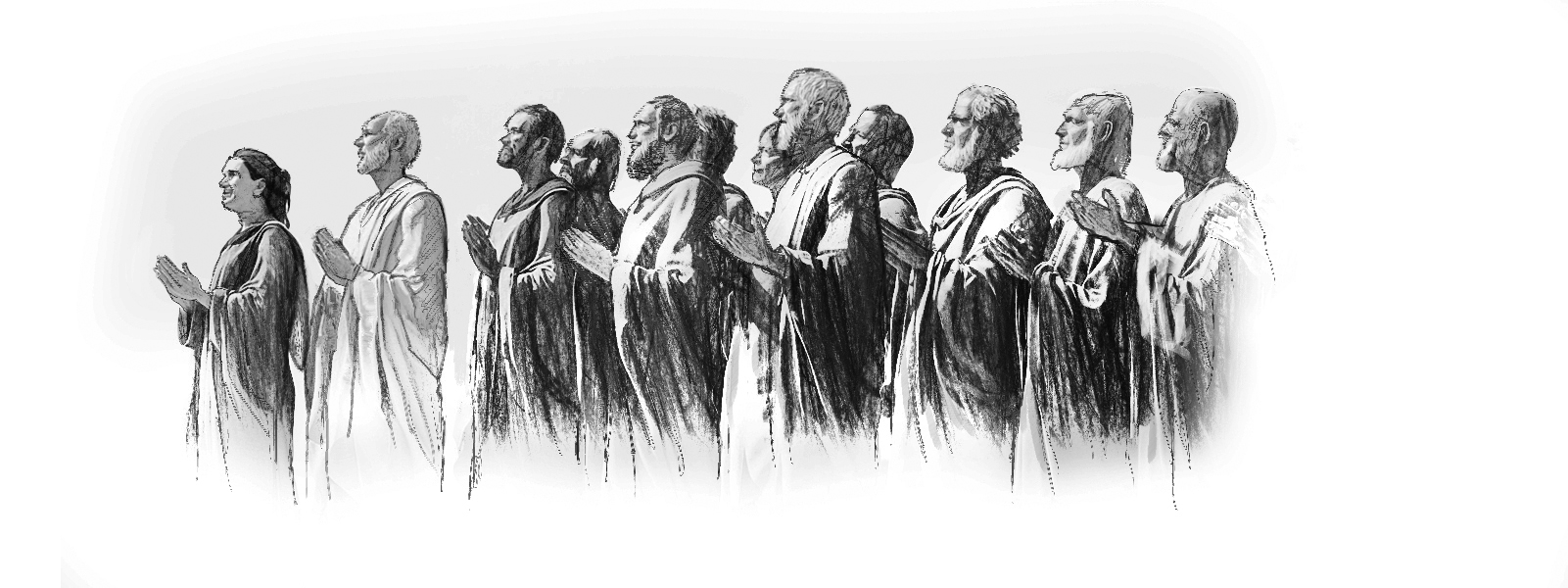
Paul quite intentionally begins his epistles with words of greeting--and thanksgiving. "Grace to you and peace from God our Father and the Lord Jesus Christ. We give thanks to the God and Father of our Lord Jesus Christ" (Col. 1:2-3, NKJV).
We, like Paul, have much to be thankful for. We have experienced God's grace in profound ways, ways that even angels cannot comprehend. The same is true of God's gift of peace, which embraces harmony with God and the hope flowing from God's love.
On a human level, we can give and show appreciation to others and hope that people appreciate the things we do for them. Parents pray that their children will love God and appreciate someday, if not now, the real sacrifices they've made to give them the best upbringing they could. But, as human beings, we make many mistakes, and we learn from them (or at least we should).
This week we'll consider Paul's opening words of thanksgiving and prayer in Philippians and Colossians, which may enrich and strengthen our own prayer life.
Study this week's lesson to prepare for Sabbath, January 10.
Fellowship in the Gospel
Read Philippians 1:3-8. What is Paul thankful for? What reassurances does he give the Philippians, and why is that important?
Paul established the church in Philippi; thus, we can see the warmth of Christian fellowship pervading his letter. Though separated by hundreds of miles, Paul, chained and imprisoned, carries the church and its members on his heart; he longs for them "with the affection of Jesus Christ" (Phil. 1:8, NKJV); he gives thanks to God for them. Paul's prayer of thanksgiving even gives a glimpse of Jesus' intercession for us in heaven.
On the high priest's breastplate were 12 stones representing the 12 tribes of Israel. The people were to be "on his heart" as he interceded for them (Exod. 28:29, ESV). In an even greater way as our High Priest in the heavenly sanctuary, Jesus carries the names of His people with Him before the Father.
Interestingly, the wording of Philippians 1:3 is ambiguous, underscoring the close relationship between Paul and the Philippians. It's usually translated that Paul remembers them in prayer, but it could also refer to their remembrance of him. In any case, it underscores the close mutuality they share, which the word "fellowship" (Greek: koinonia) also underscores. As Paul had fellowship in Christ's sufferings (Phil. 3:10), the Philippians "shared" (Greek: sunkoinōneō) in Paul's sufferings and shared financially to support Paul's ministry (Phil. 4:14-15). This mutuality, which was "from the first day until now" (Phil. 1:5), leads him to thank God for them and to pray for them "with joy" (Phil. 1:4).
Interestingly, Paul describes his prison setting quite positively--as providing opportunity for "the defense and confirmation of the gospel" (Phil. 1:7, NKJV). His use of these two legal terms suggests his trial is imminent, but also that Paul is actively engaging soldiers and visitors with the gospel. Defending it (Greek apologia) against attacks and confirming its eternal verities are both essential. Paul seems to care less about his own future than about vindication of the gospel itself. Whether he lives or dies, Paul is confident that God will finish the "good work" He has begun in all who trust in Him (Phil. 1:6).
How do you understand the promise that God will finish the "good work in you" (Phil. 1:6)? What does that mean? Will this work ever end before the Second Coming?
Paul's Prayer Requests
Some years ago, there was a pastor who talked about prayers that revolve around me, me, me, and my needs or desires. He aptly characterized them as "selfish little prayers," because God has bigger things in mind.
Read Paul's prayer in Philippians 1:9-11. What is its focus, and what big requests does he make? What does it tell you about prayer?
This prayer is only forty-three words in Greek, but encapsulates all of Paul's concerns, which he will expand on in the rest of the epistle: love, knowledge, discernment, being sincere, not causing offense, and the righteousness we have through Jesus Christ. Underlying this prayer, as well as Paul's previous expressions of thanksgiving, is an emphasis on the church as a whole. Paul's prayer is completely others-focused, on behalf of the whole church and for its well-being. Let's look more closely at some of the individual elements of the prayer: Love to abound more and more. Paul doesn't just pray for more love but for love guided in a specific direction: "in knowledge and all discernment" (Phil. 1:9, NKJV). The reference to knowledge is not to merely intellectual knowledge but implies a knowledge of spiritual things that can be gained only by fellowship with God and study of His Word (see Eph. 1:17, Eph. 4:13, 1 Tim. 2:4).
Discernment. This is explained by Paul as being able to "approve what is excellent" (distinguishing it from what is morally harmful) "and so be pure and blameless" (Phil. 1:10, ESV).
Being sincere. The word in Greek means "judged by the sunlight" and refers to an untainted purity of action: "Everything that Christians do should be as transparent as the sunlight."--Ellen G. White, Reflecting Christ, p. 71.
Not causing offense. This means not being a stumbling block, not saying or doing anything that would make it more difficult for a person to believe.
Righteousness through Christ. Paul dwells at length on this in the epistles of Romans and Galatians and will expand on it also in Philippians 3. We have no righteousness of our own but only what we receive through Christ.
Whatever else we do, how can our love "abound still more and more" (Phil. 1:9, NKJV)? Why is that so important for the Christian life? (See also 1 Cor. 13:1-8.)
Spiritual Discernment Applied
The Philippians were understandably distressed when they heard of Paul's imprisonment. Now his work was severely limited. He could not travel. He could not preach. He could not visit the synagogues and teach people about Jesus as the Messiah. He could no longer raise up churches. The Philippians sent Epaphroditus to ascertain the apostle's condition, to encourage him, and to ensure that his physical needs were being met.
Read Philippians 1:12-18. How did Paul view his imprisonment? What lessons can we learn from his attitude, despite the circumstances he found himself in?
The message Paul sent back with him must have surprised the Philippians. Paul saw his circumstances through different eyes. His spiritual discernment led him to see his imprisonment as a good thing. It didn't hinder his work at all, but "actually turned out for the furtherance of the gospel" (Phil. 1:12, NKJV). Where others saw only chains and bars, Paul saw his Roman guards as potential souls in God's kingdom. He saw also that his imprisonment greatly encouraged others to be more active and more determined to spread the gospel, to speak boldly for Christ without fear of the consequences.
It may be hard to imagine, but some actually thought to benefit from Paul's imprisonment. Apparently, they thought his obscurity would lead to more attention for themselves and their own preaching of the gospel. What a powerful but sad example of human selfishness, even in the church. As Jeremiah said long before Paul: " 'The heart is deceitful above all things, And desperately wicked; Who can know it?' " (Jer. 17:9, NKJV).
Fortunately, in contrast, some faithful workers also became more zealous to spread the gospel. They loved Paul so much that the suffering they saw him endure for his faith led them to trust Christ more and emboldened them to be even more active for the Lord. It energized them to go where before they were afraid to go; it led them to speak in situations during which before they kept silent; it led to even more people accepting Christ and spreading the gospel of salvation.
What lesson have you learned from experiences that, though unquestionably bad, also brought about some benefits? Even in cases in which a benefit might not be apparent, how can we learn to trust God regardless?
Gospel Fruit
Paul's relationship with the Colossians was different from those in Philippi. He included them among those who "have not seen my face in the flesh" (Col. 2:1). Nevertheless, Paul assures them, as he did the Philippians, that he thanks God for them and is "always" praying for them.
Read Colossians 1:3-8. What three things does Paul thank God for?
Paul brings together the three virtues that he mentions in other places: faith, hope, and love (see 1 Cor. 13:13, 1 Thess. 1:3, 1 Thess. 5:8). Notice that Paul doesn't credit the Colossians for these things. He thanks the Father for them, because as James says they are among the "good and perfect" gifts that we receive from Him (James 1:17, NIV). When we see the love God has for us, it leads us to faith in Christ (Eph. 2:4-8), and we receive the hope of heaven. Peter describes it as "an inheritance incorruptible and undefiled and that does not fade away, reserved in heaven for you" (1 Pet. 1:4, NKJV).
Paul also emphasizes that the gospel is trustworthy because it is based on "the word of truth." This is an expression Paul uses elsewhere in reference to the inspired word of God (see 2 Cor. 6:7, 2 Tim. 2:15). Unlike "the word of men," it works "effectually" in those who believe (1 Thess. 2:13) and accomplishes God's will (Isa. 55:11). So, when the gospel is proclaimed, the power of God is manifested through the work of the Holy Spirit on the hearts of the hearers, and people respond. The gospel itself produces the fruit because it is "the word of life" (Phil. 2:16).
Perhaps what is most amazing is the spread of the gospel in such a short period of time. Within about thirty years of Christ's death and resurrection, Paul could already say it had spread "in all the world" (Col. 1:6). A little later in the same chapter, he says the gospel "was preached to every creature under heaven" (Col. 1:23, NKJV). The extensive Roman road system made possible rapid communication and travel, which is how Paul's epistles could be circulated so widely and quickly. But it is the power of God working through the word that gives birth to spiritual life in a person (James 1:18, 1 Pet. 1:23), making them a new creature in Christ (2 Cor. 5:17).
In Colossians 1:5, Paul writes about "the hope which is laid up for you in heaven." What is your understanding of that hope, and why does it apply to you personally, even though you are truly unworthy?
Prayer Power
Read Colossians 1:9-12. What specific requests do you find in Paul's prayer?
Paul prays "that you may be filled with the knowledge of His will." Paul describes knowing God's will as "wisdom and spiritual understanding" (Col. 1:9, NKJV). Wisdom comes, first of all, by trusting God fully, being willing to do His will (John 7:17), and not leaning on our own understanding (Prov. 3:5). But the question often arises, "What is God's will for me in this situation?" There are four main sources from which we may learn God's will as we seek it prayerfully:
Paul prays that the Colossians may "walk worthy of the Lord" (Col. 1:10, NKJV). Of course, no one is inherently "worthy," but God counts us worthy by His grace and calls us to live in accordance with that high calling (Eph. 4:1, 1 Thess. 2:12, NKJV). Paul uses the verb "walk" or "walked" three more times in this letter alone (Col. 2:6, Col. 3:7, Col. 4:5). It means to live and act in accordance with God's law (Exod. 18:20), which is possible only through the work of the Holy Spirit (Ezek. 36:27).
Paul also prays that their (and our) lives may be "fully pleasing" to the Lord and then lists several ways to do that: "Being fruitful in every good work" (Col. 1:9-10, NKJV); then "increasing in the knowledge of God" (Col. 1:10, NKJV); and, finally, in "giving thanks" (Col. 1:12, NKJV).
If someone were to ask you, "How do you know that God is leading you in one direction or another?" how would you answer--and why?
Further Thought: "Many are unable to make definite plans for the future. Their life is unsettled. They cannot discern the outcome of affairs, and this often fills them with anxiety and unrest. Let us remember that the life of God's children in this world is a pilgrim life. We have not wisdom to plan our own lives. It is not for us to shape our future. 'By faith Abraham, when he was called to go out into a place which he should after receive for an inheritance, obeyed; and he went out, not knowing whither he went.' Hebrews 11:8.
"Christ in His life on earth made no plans for Himself. He accepted God's plans for Him, and day by day the Father unfolded His plans. So should we depend upon God, that our lives may be the simple outworking of His will. As we commit our ways to Him, He will direct our steps.
"Too many, in planning for a brilliant future, make an utter failure. Let God plan for you. As a little child, trust to the guidance of Him who will 'keep the feet of His saints.' 1 Samuel 2:9. God never leads His children otherwise than they would choose to be led, if they could see the end from the beginning and discern the glory of the purpose which they are fulfilling as co-workers with Him."--Ellen G. White, The Ministry of Healing, pp. 478, 479.
Discussion Questions:
- Think about the past week and list things you are thankful for. Might you have more to be thankful for than you realize?
- Dwell on the last line of the Ellen G. White quote above. That's a very powerful statement of faith. How can you learn to trust God in such a deep way?
- In light of Colossians 1:6, 23, discuss the following statement: "For forty years did unbelief, murmuring, and rebellion shut out ancient Israel from the land of Canaan. The same sins have delayed the entrance of modern Israel into the heavenly Canaan. In neither case were the promises of God at fault. It is the unbelief, the worldliness, unconsecration, and strife among the Lord's professed people that have kept us in this world of sin and sorrow so many years. Had the church of Christ done her appointed work as the Lord ordained, the whole world would before this have been warned and the Lord Jesus would have come to our earth in power and great glory."--Ellen G. White, Last Day Events, p. 38. In what ways might we today be guilty of the same things?
Messenger of God
Oscar stood still, praying, as three barking, snarling dogs surrounded him outside a house in Kenya. The owner, who had unleased the dogs as Oscar approached the house, came over. "Who are you?" he demanded.
"I'm a messenger of God," Oscar said.
"What message has God sent you with?" the man said.
"It's the message of God," Oscar said. "Can I come in?"
The man called off the dogs and tied them up.
He looked at Oscar expectantly after they entered the house. "Let's pray," Oscar said. The man didn't close his eyes. Oscar prayed and then began discussing the first five books of the Bible, the Pentateuch. The man wasn't a Christian. He belonged to a major, non-Christian world religion, but he knew those books of the law. He asked many questions, and the two men became friends. Today, the man and his wife are Seventh-day Adventists.
On another occasion, a homeowner expressed interest when Oscar offered Bible lessons. He sent away his three children, ages 6, 8, and 13. As they left, Oscar saw that they were limping in pain. "Let the children come here so we can pray," he said. Then he saw that the children had chiggers, a tiny mite with parasitic larvae that live on or under the skin and cause irritation.
Oscar prayed for the children and left to buy medication.
The family thought that the chiggers were caused by witchcraft. But when Oscar returned, he helped the family clean their house and bedding. He instructed the parents to bathe the children, and then he provided the medication. The children were clean. Oscar prayed for the children again, and he studied the Bible with the parents. Later, the family became Adventist and sold land for the construction of a new Adventist church.
In sharing the gospel, Oscar also goes from church to church on Sundays. In Kenya, it's a tradition to allow visitors to greet church members. But once a church leader invited Oscar to a worship service and then refused to allow him to speak upon learning that he was Adventist. Oscar stayed for the worship service. As he left, he recognized several members as his neighbors, and he went over to greet them.
"The Bible is like a big ocean, and this is not the time to wait for the pastor to come and teach you," he said. "I have lessons that you can study yourself."
Seven people accepted the Voice of Prophecy Discovery Bible lessons on the spot. Others were wary but later agreed to take the lessons. Today, 43 people from the church are studying the Bible with Oscar. "Not bad for a meeting where I wasn't allowed to speak," he said with a smile.
Oscar has worked as a Global Mission pioneer for 10 years, leading 120 people to baptism and planting two churches. He hopes to open a third church soon. Learn more about Global Mission pioneers at bit.ly/GMPioneers.
Sabbath School Net is a volunteer ministry independent of the General Conference Sabbath School Department.
For questions and concerns about the Adult Bible Study Guide,
please contact the editor of the Bible Study Guide, Clifford Goldstein
The web version of the Sabbath School lesson is published on
this site by permission of the Office of the Adult Bible Study Guide, General Conference of Seventh-day Adventists.
Website contents copyright 1996-2025 by Sabbath School Net, an independent supporting ministry.
For permission to copy contents of the web version of the Sabbath School lesson, please contact both the Office of the Adult Bible Study Guide and the publisher of this site.
All art in these lessons and on the cover is published on this site by permission of
GoodSalt.com.

We invite you to join a discussion of this lesson each day on the Sabbath School Net Daily
Lessons blog. And on Sabbath mornings, you are warmly invited to join a group discussion of the week's lesson in your local Seventh-day Adventist congregation. If you do not know where to find your nearest Seventh-day Adventist Church, you can check out the
Seventh-day Adventist church locator.
Sabbath School Net is a supporting website not affiliated with nor funded by the Sabbath School Department of the General Conference of Seventh-day Adventists)It is run by volunteers and costs are covered solely by donations from the users of this site as well as the small commissions generated by sales through our links to online stores.

If you are using this site regularly, please pray for God's blessing on our visitors. Please also ask Him to impress you how you can help with the costs of putting this site up every month. We appreciate any gift to support the ongoing publication of Sabbath School Net, and only you and God know how much you can give. Even a small donation every month helps. And larger gifts are much appreciated. (No, you don't need a PayPal account. Just choose the "Continue" link to the left of the PayPal registration. And, yes, it's safe - as safe as your online bank account.)
Sabbath School Net
You can find a sampling of materials available to aid you in your studies at our Sabbath School Net "Store." (We will get a small commission not only from any books you purchase but also from whatever else you purchase at the same time. These commissions help to underwrite a small portion of the cost of publishing this site.)
You can also go directly to the home pages of stores which will pay us a small commission for whatever you choose to buy, without costing you a penny extra: Amazon.com | AbeBooks Store
Sabbath School Net Home page | Directory of Sabbath School Bible Study materials
Looking for an older lesson? You will likely find it in our Lesson Archives
Contact the Sabbath School Net Web Team
Go back to top of page