Growing in a Relationship With God
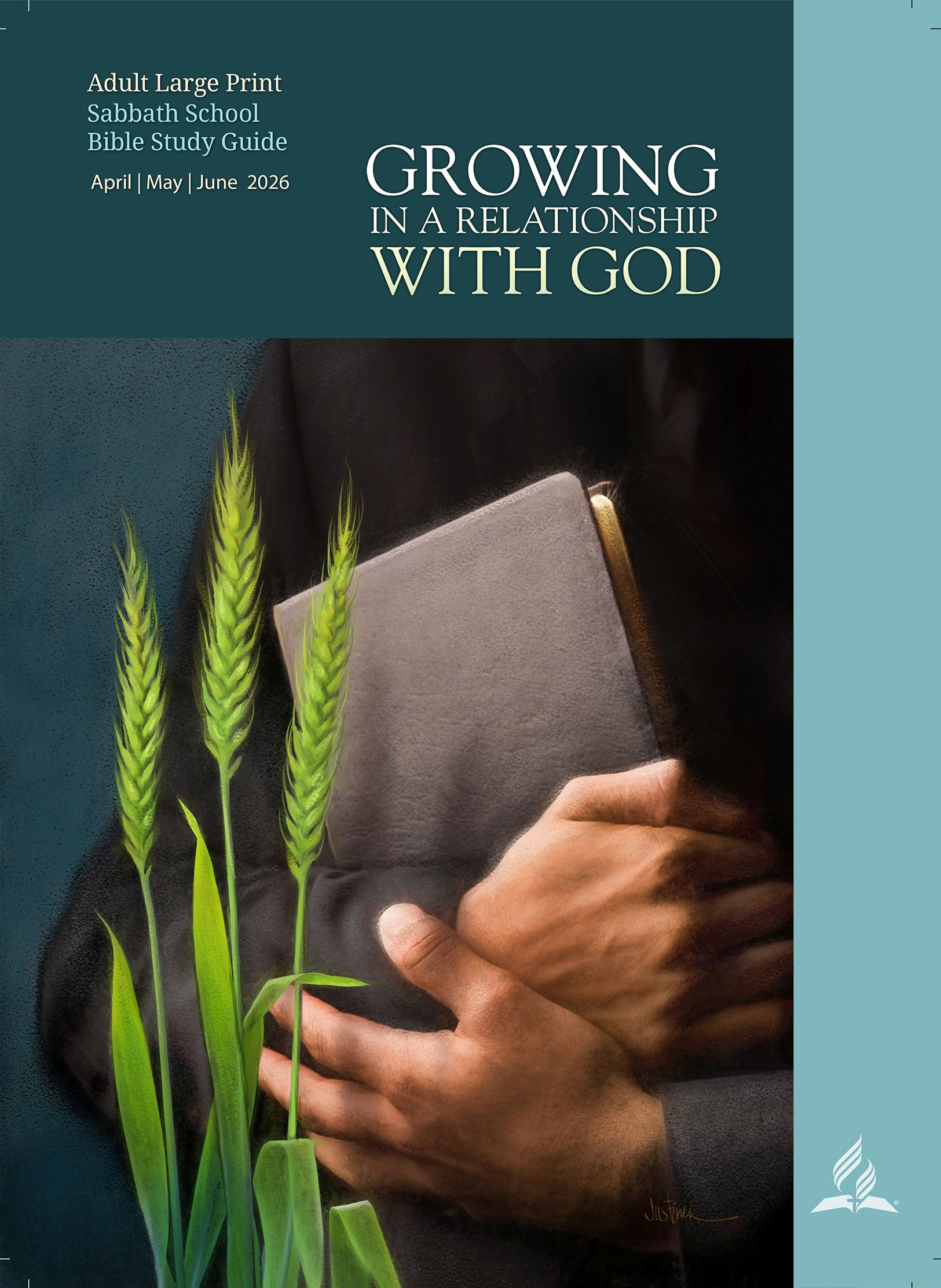
Whether you’ve grown up a Seventh-day Adventist or are new to the faith; whether you’ve read many or few Adult Bible Study Guides; and, finally, no matter where you find yourself spiritually today, the topic of how to grow in a meaningful relationship with God is crucial.
This topic affects all others. Your picture of God may have become tainted or blurred; if so, pray for greater clarity as you study. You might be wondering how to refresh your devotional life (prayer and Bible study), or you might be pondering other areas that impact your relationship with God, such as the role of pride and humility, faith and knowledge, sin and God’s law, repentance and forgiveness, how to overcome strongholds and setbacks, and how to encourage others in their walk with God.
Your relationship with God is your single most important relationship. Don’t delay in building it, in fortifying it, in making it as strong as it can be. Now--not sometime in the future--is the time to work on this relationship, which will impact everything else: your marriage (if applicable), your parenting (if applicable), your friendships, your financial decisions, your leisure, your aspirations … and, of course, your eternal future.
Because this topic--that of God’s desire to be in a relationship with humankind--encompasses the entire Bible, there are many different angles, stories, and Bible passages that could have been chosen to teach this important topic. Given the nature of the Adult Bible Study Guide, we can follow only a limited number.
Whatever your relationship with God is like today, these lessons are written with you in mind. Ultimately, the desire is that these thirteen short, focused lessons will reawaken your love and commitment to Jesus Christ as you seek Him anew this quarter.
Because the nature of this topic is about relationships, this Adult Bible Study Guide reads a little differently than previous ones. The lessons are written in a more personal style because they are about a personal God who wants to know you personally.
Ellen G. White says that “a consistent life in Christ is a great miracle.”--The Desire of Ages, p. 407. The Bible uses the metaphor of a race to describe the lifelong relationship with God. Our reward is an imperishable crown (1 Cor. 9:24-25) and eternal life with our God. Our spiritual race is a marathon, not a sprint. There may be times we stop running or even fall flat on our face. It happens, and when it does, we just get up and keep moving. We must stay the course, in spite of trials and hardships that inevitably come (Heb. 12:4-11). And we don’t run this race alone; other runners who love Jesus and His Word run with us. Most important, Jesus promised to give us the Helper. “And I will pray the Father, and He will give you another Helper, that He may abide with you forever--the Spirit of truth, whom the world cannot receive, because it neither sees Him nor knows Him; but you know Him, for He dwells with you and will be in you” (John 14:16-17, NKJV).
We do not run life’s race alone--the Helper is not only with us but dwells in us in order to strengthen and sustain us as we run and as we fix our eyes on “Jesus, the pioneer and perfecter of our faith” (Heb. 12:2, NET).
As I write, I am praying that the Holy Spirit will move upon us individually and as a worldwide church to draw us closer to God as never before. For surely there could be nothing more important than having a strong relationship with God.
So, let’s study together, to learn, to love, and to abide in Him.
Nina Atcheson is the curriculum manager and senior editor of the Alive in Jesus Sabbath School Curriculum at the General Conference. She lives to inspire and equip others to know God deeply and personally through His inspired Word. Atcheson is married to Matt, and together they have three teenage children.
Lesson 1 March 28-April 3
Reality Check

Sabbath Afternoon
Read for This Week’s Study: Rev. 3:14-22; Rev. 4:9-11; Gen. 2:7; Gen. 3:8-10; Jer. 31:3-4; John 15:1-11; Rom. 8:9-11
Memory Text: “As the Father loved Me, I also have loved you; abide in My love” (John 15:9, NKJV).
How would you describe your relationship with God today? Is it vibrant and strong? Do you spend time investing in this relationship, searching His inspired Word, and talking to Him as a Friend? If so, how much time do you spend doing it? Also, are you compelled to share with others about your relationship with God because it’s the most wonderful relationship in your life? Or, instead, has your relationship with God waned over time? It’s there, yes, and you check in from time to time, but to be honest, it’s not all that strong anymore. Or, perhaps, you’re somewhere in between, what the Bible calls “lukewarm” (Rev. 3:16).
Have you ever wondered if angels ponder why we don’t live in adoration of our Savior and Redeemer, with hungry hearts and eager minds to grow closer to God every day? But, truly, a relationship with God changes everything--both here and into eternity.
This week, let’s consider the current state of our relationship with God and what the Bible’s advice is for us. Indeed, we can’t move from where we are to someplace better until we take an honest reality check of ourselves and listen to the solution that Jesus describes.
*Study this week’s lesson to prepare for Sabbath, April 4.
Our Condition
Have you ever wondered what Jesus might say if He were to describe your relationship with Him right now? Perhaps He’d say it is strong, or that it has been stronger in the past. Have you ever wondered what Jesus might say if He were to describe His people in these last days? In Revelation 3:14-22, Jesus actually does describe it.
He begins by stating that He’s the “Faithful and True Witness, the Beginning of the creation of God” (Rev. 3:14, NKJV). A faithful and true witness doesn’t lie but speaks plainly and honestly.
Read Revelation 3:14-17, where Jesus describes the spiritual condition of His people today. How well do these texts describe you personally?
Jesus tells us, Christian individuals who live in the last days, that He knows us. We’re neither hot nor cold, because, from our vantage point, we don’t need anything. The days and weeks pass by, and we spend a little time with God here and there, and we think that’s enough. But it’s not. Instead, we actually need Him far more desperately than we realize. If only we could love and live for Jesus wholeheartedly or not at all. That would be better from God’s perspective than being lukewarm. Jesus says that He’ll vomit us out of His mouth because we taste as bad as we are. But He hasn’t yet done this, and He asks us to make some bold choices right now.
What is His advice to us in Revelation 3:18-19?
In ancient times, “buying” something meant bartering or exchanging goods. Here, Jesus generously offers an exchange: our apathy for His gold, for His white garments, and for His eyesalve. He wants to make us rich in His eyes; He wants to cover us with His perfect robe of righteousness; and He wants to open our eyes to see the truth of how an abiding relationship with Him will change absolutely everything. He offers us all that we need, especially because what we need, we can’t provide for ourselves. He alone can, and will, but only if we are willing.
If you find it painful to look at yourself and your own spiritual condition, what hope is offered you in these verses for today?
Rebuke, Repent, and Reward
“As many as I love, I rebuke and chasten,” Jesus tells us in Revelation 3:19. “Therefore be zealous and repent” (NKJV). None of us, for even a second, could justly say that Jesus doesn’t care about us or our future. How much easier it would have been for Jesus to give up on humankind and not travel the painful road He chose on this earth. It’s precisely because He loves us so deeply that He rebukes us in our current state. He wants a much stronger, deeper relationship with us. He’s not satisfied with our on-and-off attitudes, our “I’ll come to Him when I need Him” approach.
Instead, Jesus rebukes us for our own good. He tells us to repent. But we can’t repent unless we realize that there’s something wrong. Yet He’s told us exactly what’s wrong with us: we think we’re rich, but we’re actually “wretched, miserable, poor, blind, and naked” (Rev. 3:17, NKJV).
Read Revelation 3:20. What are we promised here? But what must we do to receive that promise?
This is such a beautiful and extraordinary word picture. The God of the universe wants to sit down over a meal with you, with me. He desires mutual engagement and conversation over good food. He wants a close, abiding relationship, and Jesus invites us to have this with Him.
Jesus stands patiently waiting and knocking at the door of your heart. Perhaps you’ve seen pictures of this in children’s books--a tall, graceful Savior, knocking gently. He doesn’t barge in and force you to talk with Him. He doesn’t impose on your time or your busy life. Time is short, so, if you hear Him, open the door. He will be there to step into your life.
This metaphor illustrates the kind of relationship Jesus wants to have with each of us. But one day, when you meet Jesus face-to-face, when you cast your crown at His feet in adoration and praise with thousands upon ten thousands of others in worship to the Creator (Rev. 4:9-11, Rev. 5:11-14), when you think back to your earthly trials and see that they dim into insignificance--do you think at that point you’ll ever regret the time you spent with Jesus on earth?
Right now, Jesus is knocking. He is calling. You, though, have to make the conscious choice to open your heart to Him. How can viewing the Cross and thinking about what it means inspire you to make that choice?
Everlasting Love
After depicting our apathetic condition, Jesus tells us that this is something to be overcome. “To him who overcomes I will grant to sit with Me on My throne, as I also overcame and sat down with My Father on His throne” (Rev. 3:21, NKJV). For some of us, it may be the greatest battle we ever face--simply realizing our weak, self-sufficient condition; accepting Jesus’ rebuke; repenting; and receiving Jesus’ robe of righteousness over us.
What is so amazing is that Jesus understands our apathetic, lukewarm condition and identifies with us (not that Jesus was ever lukewarm). He says, “To him who overcomes … as I also overcame” (Rev. 3:21, NKJV). Because He died to save us, Jesus has overcome sin and its penalty. He understands the battles of sin that we face and promises to help us.
Many people in the Bible responded to God’s invitation to be in a covenant relationship with Him. This is the overarching narrative or theme of the entire Bible. When we look at some of these people, we can see that God interacted differently with them at different times.
What do these accounts teach us about how God interacts with people in various situations?
Gen. 2:7, Gen. 3:8-10
Gen. 5:24
Gen. 6:13
Gen. 12:1-4
Exod. 34:29
Whether God physically walked with His children or whether He just talked with them, the truth is that He has always desired to be close to humankind. No matter what your relationship with God is like today, God wants to be close to you. We can read about this idea in Jeremiah 31:3-4 below: “The LORD has appeared of old to me, saying: ‘Yes, I have loved you with an everlasting love; therefore with lovingkindness I have drawn you. Again I will build you, and you shall be rebuilt” (NKJV).
Whether your day is beginning or ending right now, God is seeking you and waiting, wanting to draw you closer to Him. He wants to build--or rebuild--your relationship with Him. If it’s not happening, the fault is on your end, not His.
What are the things in your life right now that, unless overcome, can and do hinder your relationship with God?
Abide
The disciples followed Jesus down the stairs from the upper room onto the street below. As they walked together to Gethsemane, on what was one of the most significant nights in earth’s history, they probably didn’t realize how poignant some of Jesus’ last words to them in the Upper Room really were.
What did Jesus say in John 15:1-11? What does this mean for us?
These words, spoken by Jesus Himself, describe what a close relationship with God is like. Notice the word that is repeated, not just twice but 10 times: abide. To abide in Jesus is to live in connection with Him.
As He faces the Cross, not only does Jesus emphasize the great importance of this abiding in Him, but He clearly and simply states the practical aspect of what it looks like in our lives.
Which is: Jesus is the vine, we are the branches. As a result of our abiding with (being connected to) Him, fruit will grow on our branches. We can’t make spiritual fruit grow ourselves. Sometimes we might look as if we’re abiding, but the evidence will be in our lack of fruit, and eventually our branches will dry up. If we’re withered, the Vinedresser will eventually cut off the branches. Regardless of whether we bear fruit or not, our branches will be pruned.
At the same time, we all face challenges and painful moments. If we abide in Him, these moments will produce more fruit long-term. Fruit-bearing confirms who we are (disciples). We bear fruit to bring Him (not ourselves) glory. Abiding in Jesus means keeping His commandments, which are a reflection of His beautiful character of unselfish love. Abiding in Jesus brings great joy. Abiding in Jesus means doing what He asks of us, as a response to Him. “For this is the love of God, that we keep His commandments. And His commandments are not burdensome” (1 John 5:3, NKJV).
If you think about it, abiding in Jesus is one of the antidotes to our Laodicean condition (Rev. 3:20, John 15:4). It’s the great secret of a fulfilled and meaningful life on earth and into eternity; yet somehow we so easily forget Jesus’ counsel.
Ultimately, Jesus says to each of us, “As the Father loved Me, I also have loved you; abide in My love” (John 15:9, NKJV). The love of Jesus is the most compelling cord that draws us to Him, and when we know this love, we will be deeply moved to respond with love to God and to others.
Linked to The Vine
Abiding in Christ can sometimes feel like one of the hardest things to do. We might know that it’s what we need, but the rush of life pulls us into its stream, and it all feels too hard. Following God can seem like the biggest burden ever, especially for those badgered by someone trying to get them to follow Jesus. This kind of religion can feel like drudgery because it’s all about external actions rather than what’s in the heart. Nothing could be further from what God desires, which is a relationship whose foundation is mutual love, not just rules; a chosen relationship (in which He first chose you) based on love and free choice.
Sometimes we might be partly connected to the Vine but not really abiding with every fiber of our being. We might go to church, pray, and do what we know is right, but inside we feel shriveled up. The truth is this: We can’t make ourselves abide in Jesus any more than a branch can make itself connect to a vine. God loved us first; He made the first move. Our response is always a reaction to what God has first done for us.
If you, meanwhile, look at how a grapevine survives through winter, you’ll learn a fascinating fact--the buds on the branches become dehydrated and isolated from the growing system until spring. When the soil warms up, the roots absorb water, and sap flows up through the trunk of the vine into the buds and then initiates growth. Without the sap flowing through the vine, no growth will happen.
The sap in a grapevine is like the work of the Holy Spirit in our lives. We might be like a dead branch, but when we choose to spend time with God, the Holy Spirit enters into us like the sap from the roots and brings us to life so that we start to grow. In the same way that we need to make a conscious choice to want to abide in Jesus, we must also ask for the Holy Spirit (the sap) to flow into our lives.
Read Luke 11:13 along with Jeremiah 31:3, 1 John 4:19, and Romans 8:9-11. What is the essential message here for us?
It’s actually the Holy Spirit who brings growth and ensures that we’re thriving and connected to the Vine. We need to ask daily for the Holy Spirit, who is here with us on earth to:
- Be our Comforter (John 14:16-18).
- Reveal Jesus to us (John 15:26).
- Convict us of sin (John 16:7-8).
- Guide us into all truth (John 16:13).
Read this list again. How can each aspect of what the Holy Spirit does impact your relationship with God?
Further Thought: Before we were born, God loved us; He had a plan to know us and for us to know Him. He seeks us out, like a good Shepherd, and invites us to abide in Him every day. We merely need to choose to respond to Him, and then to exchange our wretchedness and our Laodicean condition for His good gifts (see Rev. 3:18-19).
Like the slow growth of a grapevine’s branches, our relationship with God might grow slowly, or it might come in bursts as a result of much-needed rain. Regardless of the pace at which we grow and the abundance of fruit that is produced in our lives, we need daily “sap,” or the Holy Spirit, to ensure that we’re remaining connected to Jesus. “Abiding in Christ means a constant receiving of His Spirit, a life of unreserved surrender to His service. The channel of communication must be open continually between man and his God. As the vine branch constantly draws the sap from the living vine, so are we to cling to Jesus, and receive from Him by faith the strength and perfection of His own character.”--Ellen G. White, The Desire of Ages, p. 676. “How is the dry disconnected sapling to become one with the parent vine stock? How is it to be made a partaker of the life and nourishment of the living vine? Only by being grafted into the vine, by being brought into the closest relationship possible. Fiber by fiber, vein by vein, the twig holds fast to the life giving vine until the life of the vine becomes one with the branch, and the branch produces fruit like that of the vine.”--Ellen G. White, manuscript 67, 1897.
Discussion Questions:
- Reflect back over your life. Can you identify any life events that have lulled you into a Laodicean spiritual condition? What events have drawn you closer to God?
- Ellen G. White talks about “a constant receiving of His Spirit.” How often do you pray for the Holy Spirit? What might change if you received the Holy Spirit every day?
- What might change if we, as a church, were to pray for the Holy Spirit more earnestly and more regularly?
- Be brutally, even painfully, frank with yourself over your relationship with God. What conscious choices do you need to make in order to have the closeness with Him that He wants but that you hinder?
Summary: Before we can start growing in a relationship with God, we first have to pause to consider what our current relationship with Him is like. If it’s Laodicean or if our branches are not flourishing, Jesus has the perfect solution for our spiritual condition: to abide in Him.

Kasereka
Kasereka
Business of Being a Blessing
Kavono Kivatsi Samwele loved playing the drums in his village in the Democratic Republic of Congo. It was a good life, playing the drums while his wife sang, as he waited to become village chief.
But then Kavono, who was in his early 20s, got an idea. It would be even more fun to accompany his wife on the drums if he could write the songs that she was singing. To do that, he needed to learn how to read and write. He noticed that a Seventh-day Adventist school had opened in a neighboring village, and he enrolled in the first grade.
At the school, he learned to read and write, and he also learned about the God of heaven. As he studied, he felt called by God to become a pastor. So, he gave up his claim as village chief and became an Adventist pastor. He also had a son named Kasereka Maghulu Kavatsi.
As a boy, Kasereka accompanied his father on pastoral trips and felt called to also engage in mission. But his talent was in entrepreneurship, so he went into business, establishing a farm, expanding into fishing, and then opening a clothing store. His businesses grew into a thriving empire.
Kasereka did not forget the Bible truths taught by his father, and he returned a 10 percent tithe. After marriage, the couple's first tithe amounted to U.S.$10,000. Kasereka's wife, the daughter of a church evangelist, said they also needed to give an offering of 10 percent. Kasereka had long been uncertain about how much to give for offering, and her appeal persuaded him. The couple gave another $10,000 for offering. After that, they regularly gave a 10 percent tithe and 10 percent offering, and they never lacked anything. "When you help the church, you get a blessing back," Kasereka said.
Seeking to do his part to proclaim Jesus' coming, Kasereka distributed copies of The Great Controversy to fellow business leaders and government officials. He opened an orphanage. He sponsored orphans and others in their studies, including helping them obtain master's degrees and doctorates.
As he sought to bless others, blessings always returned to him. He put more than 100 people through graduate school, but many of the graduates couldn't find work because of a lack of highly qualified jobs in the country. So, Kasereka ended up hiring them to work for him, and their skills proved to be a blessing to his businesses.
"You cannot outgive God," he said.
Part of this quarter's Thirteenth Sabbath Offering, also known as the Quarterly Mission Project Offering, will support projects in the Democratic Republic of Congo and elsewhere in the East-Central Africa Division. Thank you for your generous offering to help proclaim Jesus' soon coming.
Sabbath School Net is a volunteer ministry independent of the General Conference Sabbath School Department.
For questions and concerns about the Adult Bible Study Guide,
please contact the editor of the Bible Study Guide, Clifford Goldstein
The web version of the Sabbath School lesson is published on
this site by permission of the Office of the Adult Bible Study Guide, General Conference of Seventh-day Adventists.
Website contents copyright 1996-2025 by Sabbath School Net, an independent supporting ministry.
For permission to copy contents of the web version of the Sabbath School lesson, please contact both the Office of the Adult Bible Study Guide and the publisher of this site.
All art in these lessons and on the cover is published on this site by permission of
GoodSalt.com.

We invite you to join a discussion of this lesson each day on the Sabbath School Net Daily
Lessons blog. And on Sabbath mornings, you are warmly invited to join a group discussion of the week's lesson in your local Seventh-day Adventist congregation. If you do not know where to find your nearest Seventh-day Adventist Church, you can check out the
Seventh-day Adventist church locator.
Sabbath School Net is a supporting website not affiliated with nor funded by the Sabbath School Department of the General Conference of Seventh-day Adventists)It is run by volunteers and costs are covered solely by donations from the users of this site as well as the small commissions generated by sales through our links to online stores.

If you are using this site regularly, please pray for God's blessing on our visitors. Please also ask Him to impress you how you can help with the costs of putting this site up every month. We appreciate any gift to support the ongoing publication of Sabbath School Net, and only you and God know how much you can give. Even a small donation every month helps. And larger gifts are much appreciated. (No, you don't need a PayPal account. Just choose the "Continue" link to the left of the PayPal registration. And, yes, it's safe - as safe as your online bank account.)
Sabbath School Net
You can find a sampling of materials available to aid you in your studies at our Sabbath School Net "Store." (We will get a small commission not only from any books you purchase but also from whatever else you purchase at the same time. These commissions help to underwrite a small portion of the cost of publishing this site.)
You can also go directly to the home pages of stores which will pay us a small commission for whatever you choose to buy, without costing you a penny extra: Amazon.com | AbeBooks Store
Sabbath School Net Home page | Directory of Sabbath School Bible Study materials
Looking for an older lesson? You will likely find it in our Lesson Archives
Contact the Sabbath School Net Web Team
Go back to top of page