
Sabbath: Now Hear This!

Daily Lesson for Sabbath 7th of November 2026
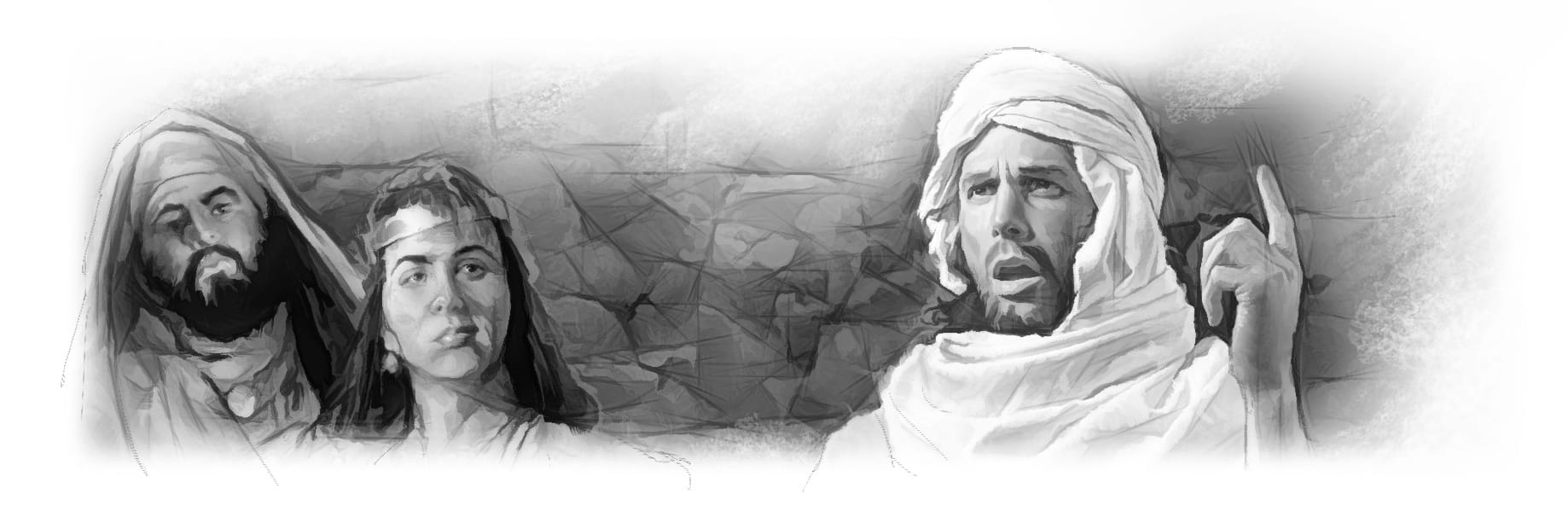
Image © Pacific Press
Read for This Week’s Study
Numbers 13:26-30; Jeremiah 36:20-26; 2 Chronicles 36:15-16; Matthew 23:30-35; 1 Corinthians 10:6-12.
Memory Text:
“Now these things happened to them as an example, and they were written for our instruction, upon whom the ends of the ages have come” (1 Corinthians 10:11, NASB).
Some people today are encouraged to speak “their truth”—their experiences, their ideas, their needs, their boundaries, their convictions—whatever these may be. Every “truth” is valid (the thinking goes) and should not be silenced. What happens, however, when some of these deeply held “truths” conflict with the Truth, Jesus Christ, and His Written Word?
What happens is that some people will accept biblical truths and turn away from their errors; others, however, will cling to their lies. Some change their behavior in response to truth; others rebel against it. Such has been the history of humanity.
Biblical prophets were often called to deliver messages that people did not want to hear. As a result, many were criticized, ostracized, even threatened with death or indeed killed (Hebrews 11:32-38). Despite all this, God’s prophets faithfully proclaimed their messages because divine prophetic guidance was not optional for them. It was lifesaving instruction for the people of God. Hence the messages had to be delivered, no matter the personal cost to the prophet.

I think that most of us have either given or received messages that we did not want to hear, or were ignored. I once was on a committee advising an organisation about their Information Technology needs and at one of their meetings, I put forward a proposal that the organisation needed a document management system (DMS). I outlined the current chaotic state of documents and the workload associated with it and proposed a plan for a network based DMS and outlined the advantages of it. A person of influence (now deceased) thought his current system of filing cabinets was sufficient (most of us avoided the filing cabinets for obvious reasons) and opposed the proposal. Furthermore, after the meeting I was called into his office and roasted for having the temerity to propose such a plan. His method was what we had always done; end of discussion! The fallout was so bad it took ten years before a DMS was implemented in that organisation.
One of the issues we face is that we become so set in our ways that anything that changes the status quo is considered radical and the first reaction is to reject the idea. I suggest that one of the main reasons that people rejected the messages of the prophets was that their messages were radical and were suggesting people change the way they were doing things. Ezekiel, Zechariah, Jeremiah, and other unnamed prophets, encouraged the nation to “Turn ye, turn ye from our evil ways!” But, the problem was that evil was the status quo and the people were comfortable with it. The action required was radical and uncomfortable. They ignored the prophets and when the message got too irritating, they tortured and killed them. When you do not like the message, shoor the messenger.
It raises the question: are we Christians comfortable in our status quo to the extent that we are ignoring prophetic messages today? This is not an invitation to identify who is a prophet but rather an opportunity to think about our status quo.
Well said Maurice. Thank you for this inspiring comment.
Brothers and sisters, NOW HEAR THIS!
We are living in a world where almost everything is changing and changing very quickly. What was considered to be right yesterday may be considered to be wrong today. What was once accepted as truth is now minutely questioned. Opinions change, values change, governments change, and even moral standards are being redefined. In our time, nothing seems to be holding ground any more. The world is a shifting ground. However, in the midst of all this uncertainty, there is one thing that has not changed, something that will never change: THE WORD OF GOD!
Jesus affirmed the eternity of the Word of God.
“Truly I tell you, this generation will certainly not pass away until all these things have happened. Heaven and earth will pass away, but my words will never pass away.” (Matthew 24:34-35, NIV).
The greatest danger to our spirituality is not that the world has stopped believing in the Word of God, but that we ourselves have not sufficiently surrendered to the authority of the Word of God.
In a world filled with competing voices, Christians must deliberately choose which voices to listen to. Some voices encourage faith, while others promote doubt; some speak the truth, while others spread misinformation. Some draw us closer to God, while others lead us away from Him. The GIGO principle (Garbage In, Garbage Out) reminds us that poor input produces poor output. This principle applies equally to our minds: what we listen to, read, and watch gradually shapes our thoughts, attitudes, and actions. Filling our minds with negative and misleading messages weakens our faith and distorts our spiritual outlook. Instead, we are encouraged to focus on whatever is true, honest, just, pure, lovely, and of good report (Philippians 4:8). Jesus reminds us, “Take heed what ye hear” (Mark 4:24, KJV). We must therefore give priority to God’s Word, for “faith cometh by hearing, and hearing by the word of God” (Romans 10:17, KJV).
The experiences of ancient Israel were recorded to teach us important lessons about the choices we make and the voices we allow to influence us. Not every voice deserves our attention, nor should every message be entertained. When we continually listen to bitterness, fear, gossip, and discouraging words, these gradually shape our character and influence how we relate to others. Conversely, when we choose to listen to truth, encouragement, wisdom, and counsel from the Lord, our lives begin to reflect these virtues. As Paul reminds us, “Now these things happened unto them for ensamples: and they are written for our admonition, upon whom the ends of the world are come” (1 Corinthians 10:11, KJV). Just as the Israelites were influenced by the voices around them, we too are constantly exposed to messages that can generate fear, worry, doubt, and confusion or strengthen our faith and draw us closer to God. Their experiences should awaken our discernment and remind us to be careful about what we allow into our minds and whose voices we choose to follow.
Christianity is more than attending church, listening to sermons, or reading the Word; it is about allowing the voice of the Lord to transform our lives. The purpose of hearing God’s Word is not simply to acquire knowledge but to experience a change in our thinking, character, attitudes, and conduct. James 1:22 cautions us, “But be ye doers of the word, and not hearers only, deceiving your own selves” (KJV). Similarly, Jesus declares, “My sheep hear my voice, and I know them, and they follow me” (John 10:27, KJV). True listening therefore goes beyond hearing; it requires understanding, accepting, and responding through obedience. Our responsibility is not merely to avoid misinformation and harmful influences but, more importantly, to seek the voice that corrects, guides, inspires, and transforms us into the likeness of Christ. Ultimately, the voice we choose to hear must be reflected in the lives we choose to live.
I could say “I wish”, but I rather say “I pray” that as Christians we are willing to Now Hear This –
Mark 12:28-31
”One of the teachers of the law came and heard them debating. Noticing that Jesus had given them a good answer, he asked Him, “Of all the commandments, which is the most important?
”The most important one,” answered Jesus, “is this: ‘Hear O Israel: The Lord our God, the Lord is one.’
Love the Lord your God with all your heart and with all your soul and with all your mind and with all your strength.’ The second is this: ‘Love your neighbor as yourself. There is no commandment greater than these.’”
From the Beginning, God, through all His agencies, reached out to give mankind one overarching message: ‘declaring the paramount significance of the act of LOVING Him!’ To understand this is central to our relationship with Him because our life is lived by faith. This represents the overarching, most pertinent, most perfect, most inclusive Truth our God wants mankind to know. Do we hear Him?
For mankind’s protection from evil, in every age, in every dispensation, in every circumstance, God calls us to first and foremost LOVE Him. As soon as we dedicate our heart, mind and ensuing actions to loving Him, He forms in us the reflection os His Image and we have Rest – I see this to be HIS prophetic message.
When I taught 4th grade, I provided a vocabulary template for the students. In the center of a sheet of paper they would write a word, and then in the four surrounding quadrants, they would write synonyms and what the word is, antonyms and what the word is not, a sentence using the word, and draw a picture.
“Truth” can be defined by what it is NOT as much as by what it IS. There are antonyms to truth. The lesson points out that contrary to the sentiment of today’s culture, all utterances and opinions and ideas cannot be truth.
So, just for fun, how about we fill out the vocabulary template together….In the oval in the center of the paper we write “truth” in our favorite, fanciest writing.
What do you want to draw for a picture? I’m drawing a figure of Jesus and an open Bible. Jesus says, “I am the Way, the Truth, and the Life” (John 14:6) The Truth is a Person, the God-Man Jesus. I’d add beams of light around Jesus’ face (Jn. 3:19,21). John 17:17 says, “Your Word is truth.” So truth is also God’s Word that became flesh in Jesus (John 1:14). Let’s add some light shining up out of the open Bible, too.
What is our definition of what truth is? I’m writing, “Truth is who God is, what He says, and what corresponds to reality as He defines it.” Ps. 119:160 says, “The entirety of Your Word is truth…” Jn. 8:32 says that we can know the truth and the truth will set us free. Synonyms are faithfulness/reliability/loyalty/the Rock (Ex. 34:6; Deut. 32:4); honesty/ integrity/righteousness (Ps. 15:2; Prov. 12:17) and light (Ps. 43:3; 1 Jn 1:5-6). In Hebrew Old Testament, the word ’emet emphasizes firmness and faithfulness – something that holds firm under pressure. In Greek New Testament, aletheia emphasizes unveiling or “unhiddenness” – reality brought into the open. These words add a richer meaning than the English “truth” alone.
What shall we write about what truth is not? Truth is NOT relative or subjective, but rooted in God and not in personal feelings, cultural consensus or individual preference. Satan is the father of lies and untruths (Jn. 8:44). God never lies (Num. 23:19; Titus 1:2; Heb. 6:18). Truth is also NOT merely intellectual knowledge without corresponding actions (1 Jn. 1:6,8; 1 Jn. 3:18). The opposite of the light of truth is the darkness of falsehood and error. Antonyms of truth are hypocrisy, deception, relativism, and unfaithfulness.
Our sentence? (OK, we can write a couple sentences.) Truth is God’s own character expressed in His Son, revealed in His Word, and applied by His Spirit. Truth is..well, true… firm, reliable, genuine and liberating. Its opposites are unstable, deceptive, false and enslaving. A key biblical passage about Truth 2 Tim. 2:15-19. I want to live in and with God’s Truth.
I give you all A+ 🙂 Don’t forget to put your name on your paper.
Enjoyed being in your class,teacher! It was a learning experience.
I need a personal experience with God. But a real experience of the divine is always aligned with what we already know about it. Thus, my personal experience must corroborate God’s most explicit demonstration of love: Jesus!
It was the Love of God in Jeremiah that compelled Jeremiah to deliver the return to Me message that God gave to Him to deliver to the king and the priests of the time. Notice that God of Abraham protected Jeremiah and his scribe Baruch from a defiant king and defiant priest Jeremiah 36:26.
The same God will protect us from the defiant promoters of their own truth as we stand up for the Truth found from cover to cover in the Bible. Do we need to remember what we learned as a child? If that’s what it takes.
The B-I-B-L-E (B-I-B-L-E) Yes, that’s the book for me I stand alone on the Word of God The B-I-B-L-E. 🙏 🙏 🙏
Having said that, I still don’t reject the message from God through the prophet’s. Because they are from a God who is seeking redemption for as many as possible of those who choose to be redeemable and let God reconcile us. I firmly believe that Christ saw in us a potential, or posibility if you prefer, for redemption.
https://egwwritings.org/read?panels=p15.476&index=0