
Thursday: The Churches of Philippi and Colossae

Daily Lesson for Thursday 1st of January 2026
Read Philippians 1:1-3 and Colossians 1:1-2. How are the churches in Philippi and Colossae described, and what significance does the depiction have?
Paul’s typical greeting in his epistles calls Christians in those places “saints”; that is, through baptism they have been set apart as God’s special people, just as the people of Israel, through the practice of circumcision (Exodus 19:5-6; compare 1 Peter 2:9-10), had been set apart as a “holy nation.” (This has utterly nothing to do with the Roman church’s practice of canonizing people as “saints.”)
Also interesting is the parallel between the greetings of these two epistles. Paul refers to “overseers and deacons” (Philippians 1:1, ESV) in Philippi and “faithful brothers in Christ” (Colossians 1:2, ESV) in Colossae. When the New Testament speaks of “faithful brothers,” they have a specific ministry in the church (see Ephesians 6:21, Colossians 4:7, 1 Peter 5:12). So, it appears Paul is addressing not only the church members but also the church leaders in these cities. The reference to offices that are more specifically described in other places (for example, in 1 Timothy 3:1-12, Titus 1:5-9) witnesses to the existence and importance of organization from the earliest period of the church.
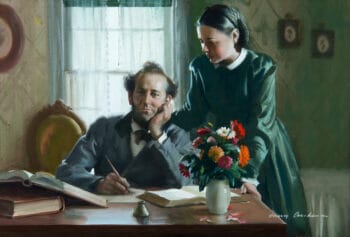
Image © Review & Herald Publishing at Goodsalt.com
Training coworkers such as Timothy and Epaphras and providing for the leadership of local churches was a priority for Paul and augmented his evangelistic efforts. In other words, there was a strategic approach to both outreach and retention. Our Adventist pioneers followed the New Testament model of church organization, as many Advent Review and Sabbath Herald articles from the 1850s show. In fact, James White said, “The divine order of the New Testament is sufficient to organize the church of Christ. If more were needed, it would have been given by inspiration.”—“Gospel Order,” Advent Review and Sabbath Herald, Dec. 6, 1853, p. 173. Long before Paul wrote to these churches, the apostles had already begun installing officers for the church in Jerusalem (see Acts 6:1-6, Acts 11:30), which “was to serve as a model for the organization of churches in every other place where messengers of truth should win converts to the gospel.”—Ellen G. White, The Acts of the Apostles, p. 91.
It is well known that Paul used literary assistants at times in the composition of his epistles. Timothy is also named as a co-sender elsewhere (see, for example, 2 Corinthians 1:1, Philemon 1:1-25). The fact that Paul goes on to use “I” rather than “we” shows that his authority stands behind these epistles also.

I guess the congregations in Phillipi and Colossae were quite small at the time Paul wrote his epistles to them. Keeping the fires stoked in a small church is always difficult. A few years ago, we toured Tasmania and without much research we decided to visit a church on Sabbath which has long family associations with Carmel’s side of the family. It was closed. The building was intact and well kept, but there was nobody present. Over time, with younger members moving to the cities to find work and older generations aging and dying, these country churches find it hard to stay alive. The same story can be repeated in many country areas. Even in some of our cities, changing demographics have closed many of our churches.
Phillipi had the added issue of persecution and Colossae had the pressure of doctrinal heresy, both of which work against church development. The title of this week’s lesson is, “Persecuted but Not Forsaken”, but it could just have easily been, “Small, but Not Forgotten”. I imagine that for a small congregation to receive a personal letter from Paul it must have been an incentive to hold onto their faith.
In applying these lessons today, maybe we should consider our communication with our isolated members, small struggling congregations, individuals who can no longer attend church (or who no longer want to attend church). We pray for the Holy Spirit to be near these folk, but maybe the Holy Spirit is asking us to step up to the mark ourselves and communicate with them, assuring they are remembered and loved by us (and by inference, by God)
I know we will get stuck into the theology in these lessons but keep in mind that the Gospel is transmitted through relationships. What can we do to encourage church members who are doing it tough?
It is profoundly very important not to miss how Paul addresses believers in both Churches (Philippi and Colossae). Before he tells them anything or what to do, he reminds them who they are in Christ. He affirms their identity in Christ.
1. “I am writing to all of God’s holy people in Philippi who belong to Christ Jesus, including the church leaders* and deacons” (Philippians 1:1, NLT).
2. “We are writing to God’s holy people in the city of Colosse, who are faithful brothers and sisters in Christ…” (Colossians 1:2, NLT).
We as believers, it is critical to note that greetings is not a casual talk, but it will influence a conversation and a relationship. Normally, greetings precede a conversation and shapes its mood. We can clearly deduce that Paul’s greetings are:
a) Spiritual
b) Pastoral
c) Missional
d) Theological
The greetings are Christ centred, they are secured on grace, peace, God the Father and Christ Jesus. All these encapsulates the very essence of the gospel. In fact, one can right say, that greetings is an act of ministry. As Children of God, we should not greet fellow believers with a cold attitude. Greetings should bring a spirit of warmth, fellowship, common purpose and common destiny. This is not just a welcome but should bring a strong sense of reassurance, affection, identity, unity joy, and God’s presence.
Therefore, next time we have an opportunity to greet the brethren, let our greetings go forth with grace, power and bring life to those who are cast down by the spirit of the evil one.
Thanks for the indepth discussion on Paul’s Greetings.👍
The church in Philippi teaches us to live with joy and faithfulness to the gospel while Colossae reminds us to hold firmly to Christ alone as the foundation of faith and Christian life.
The church in Philippi represents believers who lived with true joy in Christ, even in the midst of suffering and hardship. They were faithful to the gospel and actively participated in ministry through generosity, prayer and strong fellowship.
The church in Colossae reflects believers who faced false teachings but were reminded that Christ alone is sufficient for salvation, spiritual growth and Christian living.
The Gospel is not just communicated through words but through relationships of love and care. The church is called to be God’s family, where believers carry one another’s burdens and demonstrate Christ’s love through practical action, especially to those going through difficult times.Encouraging believers who are struggling is not only the responsibility of pastors but of the entire church. By building relationships marked by love, care, and practical support, the Gospel becomes alive and is powerfully demonstrated through our lives.
The Gospel is heard through words, but it is seen through relationships.
The numerous churches that Paul planted had serious challenges, and naturally this can drive someone crazy with many questions. Among them was the church at Colossae, to which Paul wrote the letter commonly referred to as Colossians. Another was Galatia, which gave us the epistle known as Galatians, along with others such as Ephesus and Corinth. A snapshot of Paul’s frustration is found in one of his letters where he exclaims to the Galatians, “You foolish Galatians, who has bewitched you?”
My main emphasis, however, is on the church at Philippi, which was very different. There was minimal trouble, as demonstrated in the letter where Paul prays for the Philippians. Strikingly, Paul finds joy amid challenges, which is unusual because he is joyful while in prison. Through this one church in Philippi, he explains that he is experiencing joy despite being in a very difficult personal situation—jail. This teaches us that whenever we find ourselves today in tough situations and circumstances, there can still be joy. This is the promise of Philippians: there is joy in the Lord, a joy that keeps us going even through difficult times.
The main text is Philippians 1:3–11. Paul writes, “I thank my God every time I remember you. In all my prayers for all of you, I always pray with joy because of your partnership in the gospel from the first day until now, being confident of this, that he who began a good work in you will carry it on to completion until the day of Christ Jesus.” This is a stark contrast, considering Paul wrote this letter while sitting in jail, most likely in Rome, awaiting his trial and eventual execution. Though persecuted by the Jewish authorities and imprisoned after appealing to Caesar as a Roman citizen, Paul remained filled with joy. Writing from chains, he demonstrates the joy found in Christ—joy discovered in odd places, physically confined but spiritually free. We can only conclude that there is joy in Christ, no matter the circumstances we find ourselves in.
Today when we talk about organizing God’s church it is important to understand and to realize how the commission to evangelize filters to every single member and so training not only for leadership but to have every member working in God’s house is paramount in fulfilling the gospel commission in Matthew 28: 19-20 and Acts 26:16. We are living in a time when God is going to appear to us for to make of us ministers of the gospel bearing witness of the things that He has done in us and through us. This good news is what we can share to everyone we meet in some way that God would lay upon our hearts. The clarion call is for each one of us to be ministers of the gospel. How can I achieve that mandate? First establish your spiritual gift(s) and employ it/them to build up and to edify God’s church as stated in Ephesians 4: 11-15, 1st Peter 4:10 …all His biddings are enabling!
God gives all different talents for the use of good works; whoever hears His call has a place in the spreading of His love.
“And God has placed in the church first of all apostles, second prophets, third teachers, then miracles, then gifts of healing, of helping, of guidance, and of different kinds of tongues.” (1 Corinthians 12:28)
Very amazing interpretation, Previously I read the bible less,but after reading this special explanation I promise to read more
In Romans 3:10, Paul says, “There is no one righteous, not even one,”
In Philippians he also wrote
“I am writing to all of God’s holy people in Philippi who belong to Christ Jesus, including the church leaders* and deacons” (Philippians 1:1).
This means no one on their own can claim to be perfectly good or holy before God. But then Paul explains that through faith in Jesus Christ, God credits us with Christ’s perfect righteousness.
So, the holiness Paul talks about is really Christ’s perfection lived out in us by the power of faith and the Holy Spirit. It’s not about being flawless on our own but being made holy because of our connection to Christ.
This is why Paul can call believers “holy” because they are set apart by God through faith, covered by Christ’s righteousness, not because of their own works.
Luke 3:16 – ”I baptize you with water, but he who is mightier than I is coming, the strap of whose sandals I am not worthy to untie. He will baptize you with the Holy Spirit and fire.”
Jeremiah 4:4 – ”Circumcise yourselves to the LORD; remove the foreskin of your hearts.” Rom.2:29.
The lesson writer states: “…; that is, through baptism they have been set apart as God’s special people, just as the people of Israel, through the practice of circumcision.”
Have the churches been established through the influence of the Holy Spirit? It appears much attention was placed on the administrational structures, but what about the spiritual foundation provided and established by the Holy Spirit which is essential to maintain it, as well as mentor believers in their journey of Salvation?
I consider this spiritual foundation provided by the Holy Spirit to have been then, as it is now, greatly neglected by the leadership of the ‘well-structured’ church.
The warning goes out:
2 Tim.4:3-4 – ”For the time will come when they will not endure sound doctrine, but according to their own desires, because they have itching ears, they will heap up for themselves teachers; and they will turn their ears away form the truth, and be turned aside to fables.” 2 Thess.2:3.
Then, to be circumcised in the flesh, or, for us now, to be baptized with water, is not enough! For the Ecclesia, whether in leadership or as lay persons, our attention ought to be toward the removing of the foreskins of our heart by the power of the Holy Spirit. Then the ‘structure’ – the individual and the church, remain sound – strong and full of the Spirit of Jesus Christ unto life. John 6:63