
Wednesday: Paul and Colossae

Daily Lesson for Wednesday 31st of December 2025
We have no record of Paul ever visiting Colossae, which again tells us something about the effectiveness of his evangelistic strategy. First, it was Epaphras, a resident of Colossae (Colossians 4:12), who brought the gospel to that city (Colossians 1:7). But how was he converted? Most likely, it was in the mid-50s, when Paul was in nearby Ephesus and “all they which dwelt in Asia heard the word of the Lord Jesus” (Acts 19:10; compare Acts 20:31).
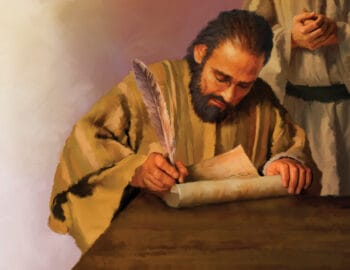
Image © Jim Howard at Goodsalt.com
The book of Revelation witnesses to how widely the gospel spread throughout this area (Revelation 1:4). The most plausible explanation for this success, including its spread to Colossae, is as a result of the work of Paul’s converts, who first heard the message in Ephesus, the most important city in Asia Minor and a major port. Epaphras heard Paul’s preaching in Ephesus and, becoming one of his coworkers, he took the gospel back to his hometown of Colossae.
The city itself, about nine miles (15 kilometers) southeast of Laodicea, is only now being excavated, so we know less about it compared to more prominent cities of the region. We do know it had a sizable Jewish population with “as many as ten thousand Jews living in that area of Phrygia.”—Arthur G. Patzia, New International Biblical Commentary: Ephesians, Colossians, Philemon (Peabody, MA: Hendrickson Publishers Inc., 1990), vol. 10, p. 3. Coins minted at Colossae indicate the people there, as in many Roman cities, worshiped a variety of gods. The pagan practices and strong cultural influences obviously presented Christians there with tremendous challenges, not only in evangelizing the city but also just remaining faithful to the pure faith of the gospel. Another prominent Christian in Colossae was Philemon, who may have been converted about the same time as Epaphras.
Read Philemon 1:15-16. See also Colossians 4:9. What course did Paul gently urge Philemon to pursue with Onesimus?
Although Roman law required Paul to return Onesimus to Philemon, Paul appeals to Philemon’s heart and conscience as a fellow believer and urges him to treat Onesimus not as a slave but as a brother (Philemon 1:16).
|
However much we detest the idea of slavery in any form, and wish that Paul would have condemned the practice, how do we come to terms with what Paul says here? (How fascinating that, during slavery in the United States, Ellen G. White specifically told Adventists to defy the law that ordered people to return escaped slaves.) |

Paul did not establish the church at Colossae as he did in Philippi. Why did he feel compelled to write to the Colossians, and what spiritual lessons can we learn from this initiative?
Paul came to know about the church at Colossae through one of the fellow believers, Epaphras, who had planted the church at Colossae (Col 1:7). Even though Paul had not personally visited Colossae, he felt that it was essential to write to encourage them to remain grounded in the truth of Christ. What do we do when we come to know or are informed that a fellow believer or believers are in some spiritual danger? Paul felt that he had a duty to warn the believers at Colossae who were in danger from false teachings. “Don’t let anyone capture you with empty philosophies and high-sounding nonsense that come from human thinking and from the spiritual powers of this world, rather than from Christ”. As a community of believers, we have a personal and collective responsibility to warn each other of the impending danger from false teachings that have flooded the world these days. It is our solemn duty to pray for one another as Paul did for the believers at Colossae.
“So we have not stopped praying for you since we first heard about you. We ask God to give you complete knowledge of his will and to give you spiritual wisdom and understanding. Then the way you live will always honour and please the Lord, and your lives will produce every kind of good fruit. All the while, you will grow as you learn to know God better and better” (Colossians 1:9-10, NLT).
Paul’s initiative to write to a congregation he had not met is very encouraging and truly worth emulating. We are not helpless to do something for a believer or believers; we have not met, and we are likely never will in this life. Our prayers can be answered in far distant lands. Our pockets/bank accounts can feed empty stomachs thousands of miles away. Those who have the power of writing can spread the truth through different channels of communication. Paul, while in prison (Colossians 4:3), was able to communicate with believers in distant lands. We might not write like Paul, but there is something that we can do. Let us be encouraged to do something; all we need to do is ask God to open our hearts and eyes to that which He wants us to do.
”I can do all things through Christ who strengthens me” (Philippians 4:13, NKJV).
Seeing I got ahead of the lesson in my comments this week I am going to reiterate an idea that I often bring up when studying these short epistles. Take time to read them as you would read a letter. Use a modern translation so you are not stumbling over Olde English. Both epistles are fairly short so you can usually read them in one or two sessions. If you like, listen to an audio presentation.
I started this practice many years ago because I recognised that in their original form, the congregation probably sat and listened to a letter as a whole when it arrived. They may have even had a meal at the same time. I first did this with Hebrews and found it made the big ideas stand out. I appreciated it so much that I have made it my practice to read or listen to the whole epistle every time one comes up for study.
It is sad to note that throughout much of church history there has been a recurring pattern in which things begin very well and then drift away from the Lord Jesus Christ. It is not only cults that get it wrong; Christians also get it wrong. In almost all instances, Paul intended to take the Christians at Colossae back to the core truth—Christ Jesus. He feared that they were slipping into false teachings. Paul was focused on ensuring their stability in Christ rather than allowing them to be swept away (verse 5). He wanted to hear and see that they were disciplined and steady in faith. He was aware that Satan comes and tempts Christians to despair, and Paul wished that the Colossian Christians would see Christ as the One who made an end to their sin. He wanted them to know that trials come to discourage them, and he wanted them to trust in their High Priest, who is able to give grace in times of need.
In verse Col 2:4 Paul says, “I say this so that no one will delude you with persuasive arguments.” Paul was fearful for these people. He was afraid that the Colossian Christians would be persuaded away from the very gospel of Jesus Christ. In his mind, Paul pictured someone possibly coming to Colossae (or Laodicea or Hierapolis) to mislead them. He imagined someone with academic qualifications, who may be would be eloquent or a skilled orator. He thought of someone who might speak appealing and persuasive words meant to draw them away from the truth of Christ. Most likely, this deception would be subtle and would not necessarily contradict everything taught about Christ by Epaphras. Instead, they might argue that Christ was not sufficient and persuade the believers to seek treasure in a different place.
Paul’s message ultimately boiled down to knowing Christ, and he prayed that they would understand that all they needed was found in Him. Notice how many times Paul mentions wisdom, knowledge, and understanding. He uses these words four times in just a verse and a half. His message is that they did not need philosophy (Col. 2:8), human traditions (Col. 2:8), Jewish festivals and Sabbath days (Col. 2:16), angels (Col. 2:18), rules about what not to eat (Col. 2:21), or rules about what not to do (Col. 2:21). They simply needed to know Christ and Him crucified and to trust Him. It was, and it is, that simple!
It is interesting that Colossae is 200.5km from Ephesus, which is a long way for people to go to Ephesus from Colossae to get in on Paul’s preaching and teaching and encouragement. Now that is how the Colossians church started. Paul never went to Colossae but those converted started the church. The Holy Spirit guiding and providing power had to be the way.
It could be that the reason the Holy Spirit directed Paul away from Asia now Turkey, was that going to Mesopotamia opened the way to Europe. We have read that Philippi is the city that opened the way to Europe.
My heart aches for Onesimus who was a slave. I can imagine the pain and humiliation he endured as a slave. With all this adversity in his life, he became a follower of Jesus Christ.
Paul sent Onesimus back to Philemon as a useful and profitable brother in Christ. He promised to pay all his debts. Philemon should not see him as a slave any more but as a brother in Christ.The same way Christ is calling us back home and ready to pay for all our sins.In Gods kingdom all slave and master shall dine in the same table because we are all children of the most high.Thank you Lord because you died for all man kind.
I love that God has paid our debts and set us free to serve Him.
John 8:35-36 – ”A slave is not a permanent member of the family, but a son belongs to it forever. So if the Son sets you free, you will be free indeed.”
Is it not true that Jesus Christ’s Gospel is all about freedom? Freedom from oppression by all the many fears which assail our heart and mind? Freedom from confusion about what is right and what is wrong in all matters pertaining to life?
I see Paul addressing the most important aspect of Slavery – loss of the freedom of choice. But what good is the freedom of a ‘free man’ if one is still a slave to sin? Both are slaves to sin unless they have been set free by our Lord and Savior Jesus Christ. Only He is able to lead us out of darkness into the heavenly Light.
To believe in Jesus Christ is freedom, to doubt Him is to remain in bondage – 2Cor.4:5-18.
In Jesus, we can be free from the slavery of sin; He gave us this opportunity as a gift. If God provides freedom of choice to all human beings, who are humans to enslave others?
John yes Philipi was strategically located to open up Europe but after looking at Biblical maps of Pauls Four missionary Journey’s Philipi was in Macidonia, Colossae was in southeast Asia, and Mesopotania was North East of Israel.
Can anyone provide the reference where Ellen White “specifically told Adventists to defy the law that ordered people to return escaped slaves?”
Here it is, quoted from Leigh Johnsen, Why have Adventists Remained Silent, 23 Sept 2025, Adventisttoday.org:
Remember how Peter and the other Apostles were preaching, teaching, and doing miracles in the name of Jesus in Solomon’s Colonade. Acts 5:12 and onward. It caused quite a stir in Jerusalem, to the point that they were arrested and put in prison. But God sent an angel to break them out of prison. That caused quite a stir among the religious leaders. In Acts 5:28 the religious leaders have them brought back before them again reiterating that they were forbidden to teach in Jesus name. What was their response? But Peter and the apostles answered, “We must obey God rather than men.” Acts 5:29
An unjust order had been given. When an unjust law against humanity or God is given we must follow their example and “obey God rather than man.”
That is exactly what Ellen White was doing in admonishing people to disregard the Fugitive Slave Law. She, and we answer to a higher authority than man. Too many people cave to man’s unjust laws which then give power to those unjust laws.
When the final crisis breaks upon the earth will we stand with man and his unjust laws regarding worship, or will we stand as Ellen, and the Apostles, and Patriarchs did? “We must obey God rather than man.”
Paul’s handling of Onesimus reveals a gospel logic that works from transformation before confrontation. Rather than launching a direct assault on the institution of slavery—which would have been socially impossible and pastorally counterproductive in the Roman world—Paul plants a far more subversive seed: a redefined relationship in Christ. By urging Philemon to receive Onesimus “no longer as a slave, but more than a slave—a beloved brother” (Phlm 1:16), Paul undermines the very foundation of slavery, which depends on denying shared dignity and kinship.
The gospel does not merely adjust behavior; it reconstitutes identity. Once Onesimus is acknowledged as a brother, the moral logic of owning him collapses, even if Paul does not explicitly pronounce abolition. Christianity’s power here is not in immediate legislation but in moral reorientation—changing hearts in ways that eventually make unjust systems untenable.
This helps us come to terms with Paul’s approach. Scripture often works redemptively within broken social realities while pointing beyond them. The same gospel principle later compelled believers—such as Ellen G. White advising Adventists to defy unjust slave laws—to act decisively when conscience and love demanded it. In both cases, loyalty to Christ outweighed loyalty to law.
Thus, Paul’s counsel is not an endorsement of slavery but a radical rehumanization of relationships in Christ—one that history shows ultimately carries revolutionary implications.